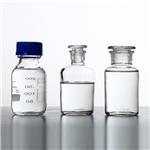
Ammonia (chemical formula: NH3) is a compound of nitrogen and hydrogen. As a colorless pungent gas, it is highly soluble in water to become the liquid ammonia. It is also one of the most abundant nitrogen-containing compound in the atmosphere. It provides the fundamental nutrients demands for various kinds of organisms by serving as a precursor of their food and fertilizer. It is also important for various kinds of biological processes. In addition, it serves as a building blocks of many kinds of commercially important nitrogen compounds as well as pharmaceutical products.
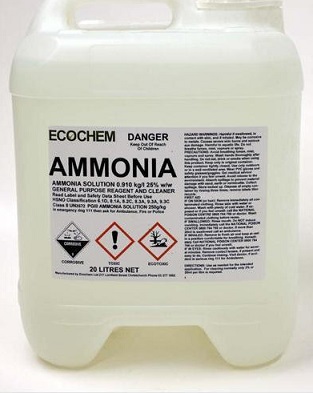
The major application of ammonia is acting as the fertilizer to supply the nitrogen source of plants and animals. It is used in the manufacture of commercial explosive such as TNT. It is applied to textile industry for the manufacture of nylon and rayon, the dyeing and scouring of cotton and silk as well as being used as a catalyst in the production of some synthetic resins. It also has applications in various metallurgical processes and fermentation processes. It can even be used as a cleaner and antimicrobial reagent in the food.
Finally, it is also an important routine reagent used in lab. For example, liquid ammonia is a common solvent in the lab. In current days, ammonia is produced by the Haber-Bosch process which has industrial hydrogen be reacted with atmospheric nitrogen under high temperature and pressure in the presence of catalyst. For small-scale lab synthesis, ammonia can also be manufactured through the heating of urea and Ca (OH)2.
Low concentration of ammonia has no significant effect on human beings. However, exposure to high concentration of gaseous ammonia can result in lung damage and even death, thus protective measures should be taken during the operation.
At atmospheric pressure, ammonia is a colorless gas with a characteristic pungent odor, which is extremely irritating to the eyes and upper respiratory tract. It is approximately half as dense as air and thus rises readily. With pressurization, 13 cubic feet of ammonia vapor can be condensed into 1 cubic foot.
Ammonia is a common chemical of production, holding a third place in world production (Makarovsky et al., 2008). The large-scale use of ammonia is facilitated by large-scale storage tanks containing millions of gallons of anhydrous ammonia with a network of piping for off-loading to train or truck. Industrial exposures come from its use in fertilizers, explosives, intermediary in chemical productions, metallurgy, paper/pulp manufacturing, and refrigeration (Makarovsky et al., 2008).
Ammonia is used extensively in the fertilizer industry to produce solid material such as ammonium salts, nitrate salts, and urea. Ammonium sulfate, ammonium nitrate, and ammonium phosphate are made directly by neutralizing the corresponding acids-sulfuric acid, nitric acid, and phosphoric acid-with ammonia. Urea is an organic compound formed by combining ammonia and carbon dioxide. Ammonium sulfate, ammonium nitrate, ammonium phosphate, and urea are used for direct application to the soil in dry form and in combination with other phosphate and potassium salts.
Ammonia is also used in the production of nitrogen fertilizer solutions that consist of ammonia, ammonium nitrate, urea, and water in various combinations. Some are pressure solutions and others are not. Nonpressure and lowpressure solutions are widely used for direct application to the soil. Pressure solutions containing free ammonia are used in the manufacture of high-analysis mixed fertilizers.
Ammonia or dissociated ammonia is used in such metal-treating operations as nitriding, carbo-nitriding, bright annealing, furnace brazing, sintering, and other applications where protective atmospheres are required.
https://en.wikipedia.org/wiki/Ammonia#Uses
https://global.britannica.com/science/ammonia#toc277712
https://pubchem.ncbi.nlm.nih.gov/compound/ammonia#section=Consumer-Uses
Ammonia is a colorless, pungent-smelling gas that is one of the most important industrial inorganic chemicals. It is widely used in fertilizers, refrigerants, explosives, cleaning agents, and as a feedstock to produce numerous other chemicals. Ammonia ranks as one of the top 10 chemicals produced annually.
Ammonia is a colorless, strongly alkaline, and extremely soluble gas with a pungent, suffocating odor.
Strong ammonia solution occurs as a clear, colorless liquid having an exceedingly pungent, characteristic odor. It is lighter than air, and is formed as a result of the decomposition of most nitrogenous organic materials. The PhEur 6.0 states that concentrated ammonia solution contains not less than 25.0% and not more than 30.0% w/w of ammonia (NH3). The USP32– NF27 states that strong ammonia solution contains not less than 27.0% and not more than 31.0% w/w of ammonia (NH3).
Anhydrous ammonia, a major commercial chemical, is used in the manufacture of fertilizers, HN03, acrylonitrile, and other products, and as an electrolytic solvent.
At standard temperature and pressure, NH3 is a colorless gas with a penetrating, pungent-sharp odor in small concentrations which, in heavy concentrations, produces a smothering sensation when inhaled. Formula weight is 17.03, and sp gr 0.817 (at 79 °C) and 0.617 (at 15 °C). Ammonia is very soluble in water, a saturated solution containing approximately 45% NH3 (weight) at the freezing temperature of the solution and about 30% (weight) at standard conditions. Ammonia dissolved in water forms a strongly alkaline solution of ammonium hydroxide, NH4OH. The univalent radical many respects like K+ and Na+ in vigorously reacting with acids to form salts. Ammonia is an excellent nonaqueous electrolytic solvent, its ionizing power approaching that of water. Ammonia burns with a greenish-yellow flame.
| Concentration | 0.50% | 1% | 2% | 5% | 10% | 15% | 20% | 25% |
|---|
| mS/cm | 0.5 | 0.7 | 1 | 1.1 | 1 | 0.7 | 0.5 | 0.4 |
|---|
Colorless gas with a penetrating, pungent, suffocating odor. An experimentally determined odor
threshold concentration of 45.8 ppmv was reported by Leonardos et al. (1969). A detection odor
threshold concentration of 11.6 mg/m3 (16.7 ppmv) was experimentally determined by Nishida et
al. (1974).
During the Middle Ages ammonia was produced by the distillation of animal dung, hooves, and horn. Its preparation from horn gave it another name: spirit of hartshorn. Joseph Priestley (1733–1804) isolated ammonia in 1774 and called the compound alkaline air. The modern name ammonia was given to the compound in 1782 by the Swedish chemist Torbern Bergman (1735–1784). The exact chemical composition was determined by Claude-Louis Berthollet (1748–1822) in 1785. During the 19th century ammonia was obtained from the distillation of coal tar. The importance of nitrogen fertilizers in agriculture was established during the mid-1800s, and this coupled with the growth of the chemical industry provided incentive to find a method for fixing nitrogen.
NH3 (ammonia) is produced in the so-called Haber Bosch process. This industrial process uses finely
divided iron as catalyst and a reaction temperature of around 450 °C at a pressure of 50 atm. Ammonia is used
to produce fertilisers, nitric acid, nylon and many more products important to our modern life style.
N2(g) + 3H2(g) → 2NH3(g)
Ammonia is a major feedstock for fertilizer, explosives, plastics, and other chemicals. The primary use of ammonia is in the production of fertilizers, with approximately 70% of ammonia being used for this purpose. Major fertilizers produced include ammonium nitrate, ammonium sulfate, and urea.
Fertilizer, corrosion inhibitor, purification of water supplies, component of household cleaners, as refrigerant. manufacture of nitric acid, explosives, synthetic fibers, fertilizers. In pulp and paper, metallurgy, rubber, food and beverage, textile and leather industries.
Ammonia is a large-tonnage industrial product and finds its major use in the manufacture of nitric acid and fertilizers. It is the most commonly used refrigerant, particularly for large industrial installations.
ChEBI: An azane that consists of a single nitrogen atom covelently bonded to three hydrogen atoms.
Ammonia is obtained commercially chiefly by synthesis from its
constituent elements, nitrogen and hydrogen, which are combined
under high pressure and temperature in the presence of a catalyst.
Ammonia solution is produced by dissolving ammonia gas in water.
The Haber process for the synthesis of ammonia is based on the reaction of nitrogen and hydrogen: N2(g) + 3H2(g) 2NH3(g). Nitrogen in the reaction is obtained by separating nitrogen from air through liquefaction, and hydrogen is obtained from natural gas by steam reforming: CH4(g) + H2O(g) → H2(g) + CO(g) According to Le Chatelier’s principle, the production of ammonia is favored by a high pressure and a low temperature. The Haber process is typically carried out at pressures between 200 and 400 atmospheres and temperatures of 500°C. In the commercial production of ammonia, NH3 is continually removed as it is produced.
The product is a 0.4 M solution of ammonia in dioxane. Ammonia is a colorless gas with a characteristic strong odor. It is highly soluble in water, alcohol, chloroform and ether. It is extensively sold in the form of solution.1 Ammonia molecule is pyramidal in shape with nitrogen in the center and the three hydrogen atoms along the three vertices and the lone pair of electrons on the fourth vertex. Ammonia solution is commonly used as a base.
Soluble in water with evolution of heat. The amount of heat generated may be large.
AMMONIA is a base. Reacts exothermically with all acids. Violent reactions are possible. Readily combines with silver oxide or mercury to form compounds that explode on contact with halogens. When in contact with chlorates Ammonia forms explosive ammonium chlorate [Kirk-Othmer, 3rd ed., Vol. 2, 1978, p. 470]. Reacts violently or produces explosive products with fluorine, chlorine, bromine and iodine and some of the interhalogen compounds (bromine pentafluoride, chlorine trifluoride). Mixing of bleaching powder (hypochlorite solution) with ammonia solutions produces toxic/explosive ammonia trichloride vapors. Undergoes potentially violent or explosive reactions on contact with 1,2-dichloroethane (with liquid ammonia), boron halides, ethylene oxide (polymerization), perchlorates or strong oxidants (chromyl chloride, chromium trioxide, chromic acid, nitric acid, hydrogen peroxide, chlorates, fluorine, nitrogen oxide, liquid oxygen). Reacts with silver chloride, silver oxide, silver nitrate or silver azide to form the explosive silver nitride. May react with some heavy metal compounds (mercury, gold(III) chloride) to produce materials that may explode when dry. [Bretherick, 5th ed., 1995, p. 1553].
Inhalation of concentrated fumes may be
fatal. Moderate fire risk, explosive limits in air 16–
25%. Forms explosive compounds in contact with
silver or mercury. Eye damage and upper respiratory
tract irritant.
Ammonia is intensely irritating to the eyes,nose, and respiratory tract. Toxic effectsinclude lachrymation, respiratory distress,chest pain, and pulmonary edema. A concentration of 10 ppm may be detected by odor;irritation of eyes and nose is perceptible atabout 200 ppm. A few minutes of exposureto 3000 ppm can be intolerable, causing seri ous blistering of the skin, lung edema, andasphyxia, leading to death. It is corrosive toskin because it reacts with moisture to formcaustic ammonium hydroxide. Long expo sure may result in destruction of tissues
LC50 value, inhalation (mice): 4200 ppm/hr.
Mixing of ammonia with several chemicals can cause severe fire hazards and/or explosions. Ammonia in container may explode in heat of fire. Incompatible with many materials including silver and gold salts, halogens, alkali metals, nitrogen trichloride, potassium chlorate, chromyl chloride, oxygen halides, acid vapors, azides, ethylene oxide, picric acid and many other chemicals. Mixing with other chemicals and water. Hazardous polymerization may not occur.
Flammability and Explosibility
Ammonia vapor is slightly flammable (NFPA rating = 1) and ignites only with
difficulty. Ammonia forms explosive mixtures with air in the range 16 to 25%.
Water, carbon dioxide, or dry chemical extinguishers should be used for ammonia
fires.
Pharmaceutical Applications
Ammonia solution is typically not used undiluted in pharmaceutical
applications. Generally, it is used as a buffering agent or to adjust
the pH of solutions. Most commonly, ammonia solution (the
concentrated form) is used to produce more dilute ammonia
solutions.
Therapeutically, dilute ammonia solution is used as a reflex
stimulant in ‘smelling salts’, as a rubefacient, and as a counterirritant
to neutralize insect bites or stings.
Anhydrous ammonia is an ammonium fertilizer made by
the Haber-Bosch process, by reacting hydrogen with
nitrogen in the ratio of 3: 1 at high temperatures (450 to
500'C) and pressure (about 500 atm) in the presence of an
iron catalyst promoted by potassium and alumina. The
nitrogen derived from air and the hydrogen obtained
from (a) synthesis gas, (b) steam reforming of naptha,
coal or coke (c) lignite, or (d) electrolysis of water, are
purified by standard procedures before use. The
anhydrous ammonia thus produced can be directly used
as a fertilizer. It can also be converted to ammonium salts
which are important fertilizers, by reacting ammonia
with nitric, sulphuric and phosphoric acids. Anhydrous
ammonia is also reacted with carbon dioxide to get urea
which is another important source of nitrogen.
Anhydrous ammonia is an important fluid fertilizer
and is the cheapest nitrogen source, having the highest
nitrogen content (about 82 %) among nitrogenous
fertilizers. However, because of safety and
environmental considerations, many dealers and users
are now switching over to other sources of nitrogen.
Anhydrous liquid ammonia can cause dehydration of
tissue and severe damage to the skin, lungs and eyes by
its freezing and caustic action. Because of the low vapor
pressure (6 bar at lO℃, 9 bar at 20℃ and 12 bar at
3O℃), anhydrous ammonia must be stored and
transported in pressure vessels.
Due to the volatile nature of anhydrous ammonia it
has to be injected with an applicator 15 to 30 cm below
the soil surface to be effective and to reduce ammonia
loss. Ammonia loss depends on the soil type,
its moisture content, and the depth to which the
applicator is injected.
Ammonia applicators range in size from small 5-row
rigs to large rigs that have a swath width of upto 20 m (65
feet) and are pulled by high-powered tractors.
Anhydrous ammonia is usually metered by a variable
orifice-type meter or by a piston pump.
Physical properties of anhydrous ammonia are
somewhat similar to other liquids under pressure like
butane or propane gas. Because of the difficulties in
handling anhydrous ammonia, water solutions of
ammonia, urea, ammonium phosphate or other soluble
solid nitrogen materials are used widely. Anhydrous
ammonia is also used in the preparation of protein feeds
for cattle and sheep, and as a defoliant to hasten the
shedding of cotton leaves to facilitate mechanical
harvesting.
Ammonia (NH3) is an alkaline gas with a sharp, penetrating odor. Reacting nitrogen and
hydrogen under pressure, in the presence of a catalyst, produces ammonia. Gaseous
ammonia is flammable in air at concentrations of 15–28% by volume. Anhydrous liquid
ammonia is a colorless liquid with a strong odor. Ammonia, because of its unique
chemical properties to metal ions, is primarily used in hydrometallurgical processing.
In the mineral processing industry, ammonia is rarely used as a pH regulator. There was
only one operating plant in the world that used ammonia as a pH regulator in treatment
of a copper/zinc ore.
Most common metals are not affected by dry
ammonia. However, when combined with water
vapor, ammonia will attack copper, zinc, or
alloys containing copper as a major alloying
element. Therefore, these materials should not
be used in contact with ammonia. Certain hightensile-
strength steel have developed stresscorrosion
cracking in ammonia service, but such
cracking can be prevented by the use of 0.2 percent
water by weight in the ammonia as an inhibitor.
Ammonia storage tanks and their valves
and fittings are usually made of steel.
Ingestion of strong solutions of ammonia is very harmful and causes
severe pain in the mouth, throat, and gastrointestinal tract as well as
severe local edema with cough, vomiting, and shock. Burns to the
esophagus and stomach may result in perforation. Inhalation of the
vapor causes sneezing, coughing, and, in high concentration,
pulmonary edema. Asphyxia has been reported. The vapor is
irritant to the eyes. Strong solutions are harmful when applied to the
conjunctiva and mucous membranes. Topical application of even
dilute ammonia solutions, used to treat insect bites, has caused
burns, particularly when used with a subsequent dressing.
When used as an excipient, ammonia solution is generally
present in a formulation in a highly diluted form.
Ammonia is used as a nitrogen source
for many nitrogen-containing compounds. It is used in the
production of ammonium sulfate and ammonium nitrate for
fertilizers; and in the manufacture of nitric acid, soda; synthetic
urea, synthetic fibers; dyes; and plastics. It is also
utilized as a refrigerant and in the petroleum refining and
chemical industries. It is used in the production of
many drugs and pesticides. Other sources of occupational
exposure include the silvering of mirrors, gluemaking, tanning
of leather; and around nitriding furnaces. Ammonia is
produced as a by-product in coal distillation and by the
action of steam on calcium cyanamide, and from the
decomposition of nitrogenous materials.
Persons having chronic respiratory disease or
persons who have shown evidence of undue
sensitivity to ammonia should not be employed
where they will be exposed to ammonia.
Ammonia is not a cumulative metabolic poison;
ammonium ions are actually important constituents
of living systems. However, ammonia
in the ambient atmosphere has an intense irritating
effect on the mucous membranes of the
eyes, nose, throat, and lungs. High levels of
ammonia can produce corrosive effects on tissues
and can cause laryngeal and bronchial
spasm and edema so as to obstruct breathing.
The pungent odor of ammonia affords a protective
warning, and as long as people are conscious
they can avoid breathing significantly
contaminated air.
Ammonia is released as a combustion product of coal, fuel oil, natural gas, wood, butane,
and propane (quoted, Verschueren, 1983).
Ammonia naturally occurs in soybean (8,600 ppm), evening-primrose seeds (2,300–2,455 ppm),
lambsquarter, and tobacco leaves (Duke, 1992).
Chemical/Physical. Reacts violently with acetaldehyde, ethylene oxide, ethylene dichloride
(Patnaik, 1992).
Reacts with acids forming water soluble ammonium salts.
On exposure to the air, ammonia solution rapidly loses ammonia.
Ammonia solution should be stored in a well-closed container,
protected from the air, in a cool, dry place. The storage temperature
should not exceed 208℃.
Shipped in tank cars, tank trucks, barges, and
steel cylinders. Labeling and restrictions vary with concentration: NA1005 Ammonia, anhydrous, Hazard
Class: 2.2; Labels: 2.2-Nonflammable compressed gas,
Domestic (U.S.), Inhalation Hazard (Special Provision 13).
UN1005 Ammonia, anhydrous, Hazard Class: 2.3; Labels:
2.3-Poison Gas, 8-Corrosive material International,
Inhalation Hazard Zone D. UN2672 Ammonia solutions,
relative density between 0.880 and 0.957 @ 15 C in water,
with .10 % but NOT . 35 % ammonia, Hazard class: 8;
Labels: 8-Corrosive material. UN2073 Ammonia solution,
relative density less than 0.880 @ 15 C in water, with .
35% but NOT . 50% ammonia, Hazard Class: 2.2;
Labels: 2.2-Nonflammable compressed gas. Note: Also
used for Ammonium hydroxide, CAS1336-21-6, Record
A:0110.
Dry the liquid, and store it, with sodium in a steel cylinder, then distil and condense it by means of liquid air, the non-condensable gases being pumped off. In order to obtain liquid NH3 from a cylinder, turn the cylinder upside-down (i.e. with the valve at the bottom, use a metal stand to secure it in this position) and lead a plastic tube from the tap to a measuring cylinder placed in an efficient fume cupboard which is kept running. Turn the tap on and allow the ammonia to be released. At first, gas and liquid will splatter out (make sure that the plastic tube is secure), but soon the liquid will drip into the measuring cylinder. The high latent heat of evaporation will cool the ammonia so that the liquid will remain cool and not boil vigorously. If the ammonia is required dry, the necessary precautions should be taken, i.e. the gas is allowed to flow through tubes packed with coarse CaO pellets. AMMONIA (gas, liquid or aqueous solution) is very irritating and should not be inhaled in any quantity as it can lead to olfactory paralysis (temporary or permanent).
With a vapor pressure of 8611 hPa at 20 °C, ammonia is a gas
under normal environmental conditions. In the atmosphere,
ammonia is estimated to have a half-life of several days. The
primary fate process is the reaction of ammonia with acid air
pollutants and removal of the resulting ammonium(NH4+
)
compounds by dry or wet deposition. Rain washout and
reaction with photochemically produced hydroxyl radicals also
contribute to the atmospheric fate of vapor–phase ammonia.
In water, ammonia acting as a weak base (pKa=9.25) will exist
in equilibrium with the ammonium ion. Ammonia will volatilize
to the atmosphere due to its high vapor pressure in water
(2878 hPa at 25°C) while the ammonium ion will be removed
via uptake by aquatic plants, adsorption to sediments, and
microbial transformation to nitrites(NO2-)and nitrates
(NO3-). In soil, the same general processes will occur.As a result, ammonia does not readily leach through soil.
However, nitrate can leach through soil due to its high water
solubility and if present at a high enough concentration may
cause methemoglobinemia in infants. Due to the multiple
physical and biological transformation processes that exist in
nature, ammonia is not expected to accumulate in the environment
or living organisms.
Ammonia solution reacts vigorously with sulfuric acid or other
strong mineral acids and the reaction generates considerable heat;
the mixture boils.
The initial threshold screening level (ITSL) for ammonia is 350 μg/m3 (1-hour averaging
time), and it is based on a controlled human study (Sundblad et al., 2004). The acute
ITSL is being changed at this time, based on an updated review of the toxicological
literature.
Dilute with water, neutralize
with HCl and discharge to sewer. Recovery is an option to
disposal which should be considered for paper manufacture,
textile treating, fertilizer manufacture and chemical process
wastes.
Included in the FDA Inactive Ingredients Database (oral suspensions,
topical preparations). Included in nonparenteral medicines
licensed in the UK. Included in the Canadian List of Acceptable
Non-medicinal Ingredients.
No commodity grade specifications for ammonia
have been published as standard for the industry.