Turpentine oil is a kind of fluid isolated from live trees, mainly pines. It consists of terpenes including monoterpenes, alpha-pinene, beta-pinene and some amount of careen, camphene, dipentene, and terpinolene. It can be used as a solvent and as a source of materials for organic synthesis. For its application in solvent, it can be used for thinning oil-based paints that are useful for the manufacturing of varnishes. In organic synthesis, it can be used for the synthesis of fragrant chemical compounds such as camphor, linalool and alpha-terpineol. It can also be used for large-scale synthesis of bundles of aligned carbon nanotubes. It can also be used as natural flavoring agent as food additive. Moreover, it can be used to synthesize pesticide as well as be used to facilitate the endodontic retreatment.
Turpentine is oleorosin extracted from trees of pinus (pinacae). It is a yellowish, opaque, sticky mass with a characteristic odor and taste. It is used extensively in different industries associated with the manufacturing of polishes, grinding fl uids, paint thinners, resins, degreasing solutions, clearing materials, and ink making.
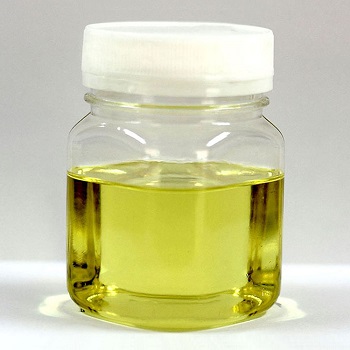
The two primary uses of turpentine in industry are as a solvent and as a source of materials for organic synthesis. As a solvent, turpentine is used for thinning oil-based paints for producing varnishes and as a raw material in the chemical industry.
Balsam turpentine is the oleo-gum-resin obtained by incisions made on the trunks of several trees belonging to the
genus Pinus. The common American turpentine comes from P. palustris. Crude turpentine contains 75 to 90% resin and 10 to 26%
oil. It is of paramount importance to use special techniques in making incisions, because the tree otherwise may die in a short time.
A gum (gum turpentine) consisting of white incrustations is formed around the incisions in the tree. Rosin is the resinous residue of
the distillation of turpentine. There are several varieties of rosin, varying in color from the palest amber to nearly black and from
translucent to opaque, depending on the turpentine source. Colophony is the name of the common rosin variety. The part used is the
oleo-gum-resin (turpentine balsam). Turpentine has a penetrating and characteristic odor and a pungent, bitter taste.
Turpentine oil is obtained by steam distillation of the oleo-gum-resin. It has a warm, balsamic, refreshing odor of turpentine.
The oil must be absolutely free of water to avoid oxidation of α- and β-pinene (approximately 80% of the oil).
Turpentine is the oleoresin from species of Pinus Pinacea trees. The crude oleoresin (gum turpentine) is a yellowish, sticky, opaque mass and the distillate (oil of turpentine) is a colorless, volatile liquid with a characteristic odor. Chemically, it contains: alpha-pinene; betapinene; camphene, monocyclic terpene; and terpene alcohols.
Turpentine has been traditionally applied as a cleaning agent for
paints, lacquers, rubber, and varnishes, as well as disinfectants
and insecticides. However, particular usage of turpentine is in
the pharmaceutical industry, and also perfumery, sprays,
deodorizers, and stimulating ointments. Nowadays, turpentine
is employed to provide isolated chemical compounds, which could be converted into a variety of products. Some terpenes
like camphor, citral, linalool, and menthol, which are employed
for the elaboration of other fragrances, can be derived from
turpentine. Miscellaneous applications for turpentine are in the
preparation of shoe, stove, and furniture polishes.
Oil of turpentine is primarily used as a solvent for industrial applications, such as thinner for paints and varnishes. Preparation of carbon nano-spheres (CNSs) by decomposition of turpentine oil has been reported.
Solvent and thinner for paints, varnishes, polishes. In manufacture of aroma chemicals such as camphor, myrcene, linalool; source of pine oil.
Turpentine has been nearly eliminated from formulas of ready-made interior oil-based paints, but it is used in shoe polishes and as a raw material in the manufacture of synthetic camphor and terpin hydrate.
Any of the volatile predominantly terpenic fractions or distillates resulting from the solvent extraction of, gum, collection from, or pulping of softwoods. Composed primarily of C10H16 terpene hydrocarbons: .alpha.-pinene, .beta.-pinene, limonene, 3-carene, camphene. May contain other acyclic, monocyclic, or bicyclic terpenes, oxygenated terpenes, and anethole. Exact composition varies with refining methods and the age, location, and species of the softwood source.
Gum turpentine is the steam-volatile fraction of pine tree
pitch.Wood turpentine is obtained from waste wood chips or
sawdust. Sulfate turpentine is a by-product in paper manufacture.
A clear colorless liquid with a characteristic odor. Flash point 90-115°F. Obtained from naphtha-extraction of pine stumps. Less dense than water and insoluble in water. Hence floats on water. Vapors are heavier than air.
Highly flammable. Insoluble in water.
WOOD TURPENTINE reacts with oxidizing agents. Calcium hypochlorite was placed in a turpentine container, thought to be empty. Reaction with the residual turpentine resulted in an explosion within a few minutes [Benson 1967]. Reacts violently with chromic anhydride [Haz. Chem. Data 1967 p. 68]. Reacts with stannic chloride producing heat and sometimes flame [Mellor 7:430 1946-47]. May also react exothermically with reducing agents to produce gaseous hydrogen.
Occupational exposures to turpentine cause adverse health effects on absorption through the skin, lungs, and intestine. The vapor of turpentine causes severe irritation to the nose, eyes, and respiratory system has a whole. Aspiration of liquid turpentine causes direct irritation to the lungs and results in pulmonary edema and hemorrhage. It also causes dermatitis, eczema, and hypersensitivity among occupational workers. Splashing of liquid turpentine in the eyes causes corneal burns. Turpentine is also known to cause skin eruption, irritation to the gastrointestinal tract, kidney and bladder damage, delirium, ataxia, and benign skin tumor.
Flammability and Explosibility
Flammable
An experimental poison
by intravenous route. Moderately toxic to
humans by ingestion. Mildly toxic
experimentally by ingestion and inhalation.
Human systemic effects by ingestion and
inhalation: conjunctiva irritation, other
olfactory and eye effects, hallucinations or
distorted perceptions, antipsychotic,
headache, pulmonary, and kidney changes.
A human eye irritant. Irritating to skin and
mucous membranes. Can cause serious
irritation of kidneys. Questionable
carcinogen with experimental tumorigenic
data. A common air contaminant. A very
dangerous fire hazard when exposed to heat
or flame; can react vigorously with oxidizing
materials. Avoid impregnation of
combustibles with turpentine. Keep cool
and ventilated. Spontaneous heating is
possible. Moderate explosion hazard in the
form of vapor when exposed to flame; can
react violently with Ca(OCl)2, Cl2, CrO3, Cr-
(OCl)2, SnCl4, hexachloromelamine,
trichloromelamine. To fight fire, use foam,
CO2, dry chemical. When heated to
decomposition it emits acrid smoke and
irritating fumes.
Turpentines have found wide use as
chemical feedstock for the manufacture of floor, furniture,
shoe, and automobile polishes; camphor, cleaning materials;
inks, putty, mastics, cutting and grinding fluids; paint
thinners; resins, and degreasing solutions. Recently,
alpha-and beta-pinenes, which can be extracted, have
found use as volatile bases for various compounds. The
components d-α-pinene and 3-carene, or their hydroperoxides,
may be the cause of eczema and toxic effects of
turpentine.
When turpentine was applied to
the skin, tumor growth was promoted in the rabbit, but not in
the mouse.
Routes and Pathways
Humans can be affected by one of several possible exposure
routes, as follows: flavoring agents in candies and chewing
gums; manufacture of turpentine oil, gum rosin, and synthetic
pine oil; application of insecticides, disinfectants, human and
veterinary medicines, ointments, deodorizers, and perfumes;
and workers in manufacturing of shoe, stove, furniture,
synthetic camphor and menthol, cleaning materials, inks,
grinding fluids, and thinners.
Partition Behavior in Water, Sediment, and Soil and
Physicochemical Properties
Table 2 shows the physicochemical properties and other
behavior of turpentine oil.
Environmental Persistency and Long-Range Transport
Turpentine is completely degradable and also does not represent
a hazard to plants treated by wastewater, because of solubility
limitations. When it is released into the environment, spills or
leaks should be completely cleaned up. Best management
practices at facilities are needed in order to reduce the amount of
turpentine released to the air during turpentine production.
Turpentine is not classified as an air-polluting substance,
according to the US Clean Air Act, because its terpenes are
completely degraded by natural processes within a few days
depending on its concentration, air temperature, and existence
of bacteria. Turpentine is recognized safe for ozone depleting or
global warming.
According to the US Occupational Safety and Health
Administration (OSHA), exposures to turpentine oil may occur
through solvents, industrial coatings, and starting material for
other compounds, and during pulp and paper processes.
People and hobbyists can be exposed through foods, personal
care products, household products, external and internal
medications, paints, and varnishes.
UN1299 Turpentine, Hazard Class: 3; Labels: 3-
Flammable liquid.
Ingestion, inhalation, and skin penetration are three common
exposure routes of turpentine, due to its lipophilic properties,
leading to easy accumulation in fats. As observed in rats,
spleen, kidneys, brain, and peripheral fats are the main sites of
local acquisition of turpentine. Liver microsomal epoxide
hydrase and uridine diphosphoglucuronosyl transferase activities were elevated during chronic turpentine exposures.
Toxicity of turpentine may also be attributed to its degraded
compounds. For instance, crude sulfate turpentine is usually
converted into methyl mercaptan. The terpene constituents of
turpentine (typically unsaturated hydrocarbons) may react
with oxidants (ozone) of indoor air to generate strong irritant
compounds such as formaldehyde or radicals.
Forms an explosive mixture with air.
Violent reaction with strong oxidizers, especially chlorine;
chromic anhydride; stannic chloride; chromyl chloride.
It is recommended that the Initial Threshold Screening Level (ITSL) for turpentine be set at 1120 μg/m3 based on an 8-hour averaging time.
Dissolve or mix the material
with a combustible solvent and burn in a chemical incinerator
equipped with an afterburner and scrubber. All federal,
state, and local environmental regulations must be
observed.
During handling of turpentine, occupational workers should always use protective clothing, rubber gloves, and face masks to avoid adverse health effects to the skin and respiratory tract.
Kalpana Awasthi, et al. "Large scale synthesis of bundles of aligned carbon nanotubes using a natural precursor: turpentine oil." Journal of Experimental Nanoscience 5.6(2010):498-508.
Bai, Yun. "The general situation of flavor from turpentine oil." China Food Additives (2006).
Pakdel, H, S. Sarron, and C. Roy. "alpha-Terpineol from hydration of crude sulfate turpentine oil. " Journal of Agricultural & Food Chemistry 49.9(2001):4337-41.
Dong-Mei, L. I., et al. "Study on synthesis of high purity α-terpineol from turpentine oil." Modern Chemical Industry (2008).
Armstrong, Henry E. "XXXV.—Studies of the terpenes and allied compounds. The nature of turpentine oils, including that obtained from Pinus khasyana." Journal of the Chemical Society Transactions 59:311-315.
Guilbert, J., et al. "Anti-flatulence treatment and status epilepticus: a case of camphor intoxication." Emergency Medicine Journal Emj 24.12(2007):859.
Qin, Lang, and Y. M. Wang. "Application of Turpentine Oil in Synergist and Pesticide and Its Progress." Fine & Specialty Chemicals (2005).
Kaplowitz, G. J. "Clinical uses of rectified turpentine oil." International Endodontic Journal 29.2(1996):93.