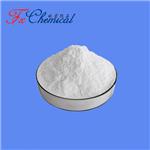
white to yellow crystals or crystalline powder
Pyrazole is used in organic synthesis and asa chelating agent.
ChEBI: 1H-pyrazole is the 1H-tautomer of pyrazole. It is a conjugate base of a pyrazolium. It is a conjugate acid of a pyrazol-1-ide. It is a tautomer of a 3H-pyrazole and a 4H-pyrazole.
Pyrazine is a heterocyclic crystalline aromatic compound with a five-membered ring containing three carbon atoms and two nitrogen atoms. It is a symmetricdiazine.
Toxic by ingestion and inhalation, irritant
to skin and eyes.
The acute toxic symptoms from oral administrationof pyrazole in experimental animalswere ataxia, muscle weakness, and respiratorydepression. It is less toxic than pyrroleand pyrrolidine. The oral LD50 value in miceis within the range 1450 mg/kg.
Pyrazole exhibited reproductive toxicityin rats and mice when administered by oralor intraperitoneal route. The effects includefetal death, developmental abnormalities pertainingto the urogenital system, and postimplantationmortality.
Moderately toxic by ingestion and intraperitoneal routes. Experimental teratogenic and reproductive effects. When heated to decomposition it emits toxic fumes of NOx.
Pyrazoles are synthesized via the condensation of hydrazines with 1,3-dicarbonyl compounds or their synthetic equivalents, as well as through 1,3-dipolar cycloaddition reactions of diazo compounds with dipolarophiles. They can also be produced by the in situ generation of nitrile imines from aromatic hydrazines and aldehydes through Oxone-KBr oxidation and base-promoted dehydrobromination, followed by cycloaddition with alkene or alkyne groups[1][2].

Crystallise pyrazole from pet ether, cyclohexane, or water. Its solubility in H2O at 9.6o is 2.7moles/L, and at 24.8o it is 19.4moles/L; in cyclohexane at 31.8o it is 0.577moles/L, and at 56.2o it is 5.86moles/L; and in benzene at 5.2o it is 0.31moles/L, and at 46.5o it is 16.8moles/1000mL. [Barszcz et al. J Chem Soc, Dalton Trans 2025 1986, Beilstein 23 H 39, 23 I 15, 23 II 33, 23 III/IV 550, 23/4 V 122.]
[1]Chandrasekharan, S. P., Dhami, A., Kumar, S., & Mohanan, K. (2022). Recent advances in pyrazole synthesis employing diazo compounds and synthetic analogues. Organic & Biomolecular Chemistry, 20(45), 8787–8817.
https://doi.org/10.1039/d2ob01918c [2]Zhou, J., Zhou, Q., & Wan, J.-P. (2024). Recent advances in the multicomponent synthesis of pyrazoles. Organic & Biomolecular Chemistry, 22(40), 8065–8077.
https://doi.org/10.1039/d4ob01211a