Synthesis
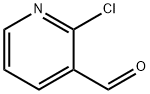
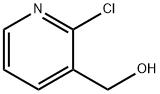
General procedure for the synthesis of 2-chloro-3-pyridinecarboxaldehyde from 2-chloro-3-pyridinemethanol: The hydrolyzed product was transferred to a four-necked flask, 300 g of ethyl acetate and 0.8 g of TEMPO were added, and the mixture was stirred and cooled to 0 °C. Subsequently, 450 g of freshly prepared sodium hypochlorite solution (pH=11, 10% active chlorine) was slowly added dropwise, and the reaction temperature was controlled at 0-5 °C. After the dropwise addition, the reaction system was warmed up to room temperature and stirred continuously for 1 hour to ensure complete reaction. Post-treatment steps: the reaction mixture was allowed to stand and layered, the ethyl acetate phase was separated, washed with water, dried with anhydrous magnesium sulfate, concentrated and then cooled and crystallized to give 79 g of the light yellow crystalline product 2-chloro-3-pyridinecarboxaldehyde, with a purity of 98.2%, and based on the yield of 2-chloro-3-chloromethylpyridine was 89.6%.
References
[1] Patent: CN107501171, 2017, A. Location in patent: Paragraph 0028; 0034; 0035; 0036; 0037; 0044; 0045-0047
[2] Journal of Heterocyclic Chemistry, 1995, vol. 32, # 5, p. 1595 - 1597
[3] Synthetic Communications, 2008, vol. 38, # 6, p. 889 - 904
[4] Synthesis, 2010, # 20, p. 3439 - 3448
[5] Chemical and Pharmaceutical Bulletin, 2000, vol. 48, # 5, p. 694 - 707