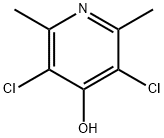
Uses
An antibiotic used in veterinary medicine as a coccidiostat in poultry. Showed low order of acute and chronic toxicity in animals.
Uses
An antiprotozoal agent.
Uses
GABA Cl channel agonist, antiparasitic
General Description
White to light-brown, crystalline solid. Mp: 320°C. Practically insoluble in water. Administered to poultry to prevent the growth of pathogenic parasites.
Reactivity Profile
CLOPIDOL is a non-combustible as a solid, but dust may burn rapidly or explode when mixed with air and ignited.
Hazard
Toxic. Mutagenic effects. Questionable carcinogen. Clopyralid.
Potential Exposure
Those engaged in formulation, application or manufacture of this veterinary antibiotic. Used as a pharmaceutical and as feed and food additive
First aid
If this chemical gets into the eyes, remove any contact lenses at once and irrigate immediately for at least 15 minutes, occasionally lifting upper and lower lids. Seek medical attention immediately. If this chemical contacts the skin, remove contaminated clothing and wash immediately with soap and water. Seek medical attention immediately. If this chemical has been inhaled, remove from exposure, begin rescue breathing (using universal precautions, including resuscitation mask) if breathing has stopped and CPR if heart action has stopped. Transfer promptly to a Medical facility. When this chemical has been swallowed, get medical attention. Give large quantities of water and induce vomiting. Do not make an unconscious person vomit.
Shipping
UN3249 Medicine, solid, toxic, n.o.s., Hazard Class: 6.1; Labels: 6.1-Poisonous materials.
Incompatibilities
Noncombustible solid, but dust may explode in cloud form. Contact with strong oxidizers may cause a fire or explosion hazard
Description
Clopidol is a coccidiostat.
1 It prevents mortality of chickens infected with the parasites
E. tenella,
E. necatrix,
E. acervuline,
E. mivati,
E. brunetti, and
E. maxima. It has antimalarial activity against
P. berghei in mice and
P. cynomologi in rhesus macaques.
2 Clopidol is a potential contaminant in food poultry.
3 Formulations containing clopidol have been used in the prevention of coccidiosis in chickens.
Description
The drug methylchlorpindol is used for the prevention
of coccidiosis in poultry.
Chemical Properties
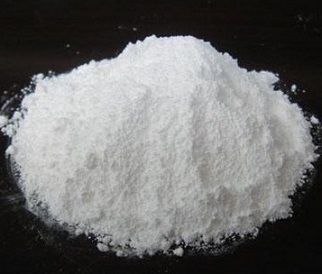
Clopidol is a white to light brown powder.
Waste Disposal
Dispose of contents and container to an approved waste disposal plant. All federal, state, and local environmental regulations must be observed. It is inappropriate and possibly dangerous to the environment to dispose of expired or waste drugs and pharmaceuticals by flushing them down the toilet or discarding them to the trash. Household quantities of expired or waste pharmaceuticals may be mixed with wet cat litter or coffee grounds, double-bagged in plastic, discard in trash. Larger quantities shall carefully take into consideration applicable DEA, EPA, and FDA regulations. If possible return the pharmaceutical to the manufacturer for proper disposal being careful to properly label and securely package the material. Alternatively, the waste pharmaceutical shall be labeled, securely packaged, and transported by a state licensed medical waste contractor to dispose by burial in a licensed hazardous or toxic waste landfill or incinerator.
Synthesis
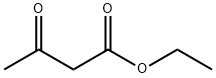
The general procedure for the synthesis of 3,5-dichloro-2,6-dimethylpyridin-4-ol from ethyl acetoacetate is as follows: 130 g (1 mole) of ethyl acetoacetate, 39 g of styrene-DVB (D301T) resin, and 100 ml of distilled water were added sequentially to three 500 ml three-necked flasks. The reaction mixture was reacted under stirring for 30 hours, during which 85 g (5 moles) of ammonia gas was released. Subsequently, 142 g (2 moles) of chlorine gas was passed into the reaction system and the reaction was continued with stirring for 2 hours. The reaction temperature was maintained at 30°C. Upon completion of the reaction, the styrene-DVB (D301T) resin was removed by filtration, and the solid cake of the resin was washed with 100 mL of 10% aqueous sodium hydroxide. The styrene-DVB (D301T) resin was recycled. The filtrate was distilled to remove a small amount of ethanol and then left to crystallize. The crystallized product was filtered and dried to give 87.8 g of 3,5-dichloro-2,6-dimethylpyridin-4-ol in 91.5% yield.
storage
Color Code—Blue: Health Hazard/Poison: Storein a secure poison location. Prior to working with clopidolyou should be trained on its proper handling and storage.Store in tightly closed containers in a cool, well-ventilatedarea.
References
[1] Patent: CN105753776, 2016, A. Location in patent: Paragraph 0009; 0020; 0021