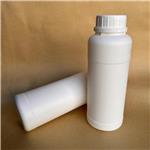
clear colorless liquid after melting
Diisopropanolamine is a corrosive, hygroscopic solid
(18, 139).
Bis(2-hydroxypropyl)amine (Diisopropanolamine) is used to study its effects upon choline uptake and phospholipid synthesis in Chinese hamster ovary (CHO) cells. It is a versatile chemical that is widely used as an emulsifier, stabilizer, surfactant, and chemical building block. It can neutralize pH, act as a buffer (stabilize pH), or add basicity (alkalinity) to a solution. Major applications include personal care products, metalworking products, and natural gas purification. Diisopropanolamine is also used in coatings, paint strippers, paper, photographic intermediates, plastics, polyurethanes, and textiles. It is frequently used to neutralize fatty acids and sulfonic acidbased surfactants.
Diisopropanolamine was used to study its effects upon choline uptake and phospholipid synthesis in Chinese hamster ovary (CHO) cells
Emulsifying and neutralizing agent in cosmetics. Removal of H2S and CO2 from natural and industrial gases. Antimicrobial agent in cutting fluids.
ChEBI: Diisopropanolamine is a secondary amino compound that is diethanolamine substituted by methyl groups at positions 1 and 1'. It is a versatile chemical used in a variety of personal care, cosmetic and industrial products. It has a role as a surfactant, an emulsifier and a buffer. It is a secondary amino compound, a secondary alcohol and an aminodiol. It is functionally related to a 1-aminopropan-2-ol.
Colorless liquid or white to yellow crystalline solid with an odor of dead fish or ammonia. Liquid floats and mixes with water. Solid sinks and mixes in water.
Diisopropanolamine is an aminoalcohol. Amines are chemical bases. They neutralize acids to form salts plus water. These acid-base reactions are exothermic. The amount of heat that is evolved per mole of amine in a neutralization is largely independent of the strength of the amine as a base. Amines may be incompatible with isocyanates, halogenated organics, peroxides, phenols (acidic), epoxides, anhydrides, and acid halides. Flammable gaseous hydrogen is generated by amines in combination with strong reducing agents, such as hydrides. Diisopropanolamine may be sensitive to light and air. Diisopropanolamine will react with oxidizing materials.
Vapor concentrations too low to irritate unless exposure is prolonged. Liquid will burn eyes and skin.
Diisopropanolamine is combustible.
Flammability and Explosibility
Non flammable
Reactivity with Water No reaction; Reactivity with Common Materials: No reaction; Stability During Transport: Stable; Neutralizing Agents for Acids and Caustics: Flush with water; Polymerization: Not pertinent; Inhibitor of Polymerization: Not pertinent.
Crystallise the amine repeatedly from dry diethyl ether. [Beilstein 4 III 761.]
The new Initial Threshold Screening Level (ITSL) for diisopropanolamine is 4 μg/m3 based on an annual averaging time.