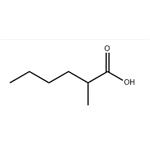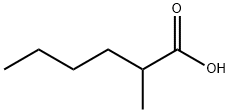
2-methylhexanoic acid
- Product Name2-methylhexanoic acid
- CAS4536-23-6
- CBNumberCB1421374
- MFC7H14O2
- MW130.18
- EINECS224-883-9
- MDL NumberMFCD00002674
- MOL File4536-23-6.mol
- MSDS FileSDS
Chemical Properties
| Melting point | -55.77°C (estimate) |
| Boiling point | 209-210 °C (lit.) |
| Density | 0.918 g/mL at 25 °C (lit.) |
| vapor pressure | 0.0576 mmHg ( 25 °C)(lit.) |
| FEMA | 3191 | 2-METHYLHEXANOIC ACID |
| refractive index | n |
| FLAVIS Number | 08.035 | 2-Methylhexanoic acid |
| Flash point | 222 °F |
| storage temp. | Store at 2-8°C |
| Water Solubility | Soluble in water |
| solubility | Aqueous Base (Slightly), Chloroform (Soluble), Methanol (Slightly) |
| form | clear liquid |
| pka | 4.82±0.21(Predicted) |
| Specific Gravity | 0.916 |
| color | Colorless to Light yellow |
| Odor | at 10.00 % in dipropylene glycol. fruity cheese oily fatty lard |
| Odor Type | cheesy |
| biological source | synthetic |
Safety
| Symbol(GHS) |
 
|
|||||||||
| Signal word | Danger | |||||||||
| Hazard statements | H226-H314 | |||||||||
| Precautionary statements | P210-P233-P240-P280-P303+P361+P353-P305+P351+P338 | |||||||||
| Hazard Codes | C | |||||||||
| Risk Statements | 34 | |||||||||
| Safety Statements | 26-36/37/39-45 | |||||||||
| RIDADR | UN 3265 8/PG 2 | |||||||||
| WGK Germany | 2 | |||||||||
| RTECS | MO8400600 | |||||||||
| TSCA | TSCA listed | |||||||||
| HazardClass | 8 | |||||||||
| PackingGroup | III | |||||||||
| HS Code | 29159080 | |||||||||
| Storage Class | 3 - Flammable liquids | |||||||||
| Hazard Classifications | Eye Dam. 1 Flam. Liq. 3 Skin Corr. 1B | |||||||||
| NFPA 704: |
|