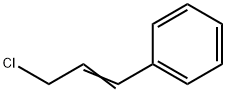
Cinnamyl chloride
- Product NameCinnamyl chloride
- CAS2687-12-9
- MFC9H9Cl
- MW152.62
- EINECS220-246-4
- MOL File2687-12-9.mol
Chemical Properties
| Melting point | -19 °C (lit.) |
| Boiling point | 108 °C/12 mmHg (lit.) |
| Density | 1.096 g/mL at 25 °C (lit.) |
| vapor pressure | 2Pa at 20℃ |
| refractive index | n |
| Flash point | 175 °F |
| storage temp. | 2-8°C |
| form | Liquid |
| color | Yellow to yellow-brown |
| Water Solubility | 0.2 g/L (20 ºC) |
| Sensitive | Lachrymatory |
| BRN | 741974 |
| InChI | 1S/C9H9Cl/c10-8-4-7-9-5-2-1-3-6-9/h1-7H,8H2/b7-4+ |
| InChIKey | IWTYTFSSTWXZFU-QPJJXVBHSA-N |
| SMILES | ClC\C=C\c1ccccc1 |
| LogP | 3.3 |
| CAS DataBase Reference | 2687-12-9(CAS DataBase Reference) |
| NIST Chemistry Reference | Benzene, (3-chloro-1-propenyl)-(2687-12-9) |
Safety Information
| Hazard Codes | T+,C |
| Risk Statements | 22-26-34-43-36 |
| Safety Statements | 26-28-36/37/39-45-28A-23-27 |
| RIDADR | UN 1760 8/PG 2 |
| WGK Germany | 3 |
| RTECS | CZ0919905 |
| Hazard Note | Corrosive/Lachrymatory |
| TSCA | TSCA listed |
| HazardClass | 8 |
| PackingGroup | III |
| HS Code | 29039990 |
| Storage Class | 10 - Combustible liquids |
| Hazard Classifications | Muta. 2 Repr. 2 Skin Irrit. 2 Skin Sens. 1B STOT RE 2 |
| Toxicity | rat,LC50,inhalation,29mg/m3/4H (29mg/m3),BEHAVIORAL: SOMNOLENCE (GENERAL DEPRESSED ACTIVITY)LUNGS, THORAX, OR RESPIRATION: RESPIRATORY DEPRESSION,Toksikologicheskii Vestnik. Vol. (4), Pg. 30, 1997. |