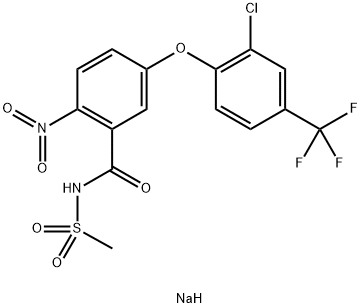
White crystalline solid or powder.
Fomesafen-sodium is manufactured by first producing fomesafen, a diphenyl ether herbicide, through a sequence that builds the aryl-ether core and introduces the sulfonamide-phenoxy functionality using robust electrophilic aromatic substitution and coupling chemistry typical of this class. Once the neutral fomesafen acid is obtained and purified, it is converted to its sodium salt via controlled neutralisation with aqueous sodium hydroxide, yielding the technical material.
ChEBI: Fomesafen-sodium is an organic sodium salt that is the sodium salt of fomesafen. A protoporphyrinogen oxidase inhibitor, it was specially developed for post-emergence control of broad-leaf weeds in soya. It has a role as an agrochemical, an EC 1.3.3.4 (protoporphyrinogen oxidase) inhibitor and a herbicide. It contains a fomesafen(1-).
Selective, absorbed by leaves and roots. Inhibits protoporphyrinogen oxidase (PROTOX), leading to irreversible cell membrane damage.
Chlorophenoxy herbicide. After July
25, 2003, flumesafen was not permitted in many countries
to be used as an active ingredient on crops except to con trol weeds in soybean crops, and white, kidney and snap
beans. Limited use allowed in some European countries.
Incompatibilities: Slowly hydrolyzes in water, releasing
ammonia and forming acetate salts.
UN2588 Pesticides, solid, toxic, Hazard Class:
6.1; Labels: 6.1-Poisonous materials, Technical Name
Required.
Do not discharge into drains
or sewers. Dispose of waste material as a hazardous waste
in a landfill approved and licensed for the disposal of pesti cides. Consult with environmental regulatory agencies for guidance on acceptable disposal practices. Incineration with
effluent gas scrubbing is recommended. Containers must be
disposed of properly by following package label directions
or by contacting your local or federal environmental control
agency, or by contacting your regional EPA office.