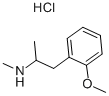
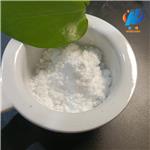
o-Methoxyphenyl oxime is synthesized from o-methoxyphenylacetone and monomethylamine in an organic solvent. The o-methoxyphenyl oxime is then reduced with sodium borohydride or potassium borohydride to obtain methoxyphenamine hydrochloride free base. The solution of methoxyphenamine hydrochloride free base is adjusted to pH 2-3 with hydrochloric acid/ethanol solution, and then purified to obtain methoxyphenamine hydrochloride. This invention uses sodium borohydride or potassium borohydride, significantly reducing reaction costs; the reaction conditions are mild, avoiding the possibility of explosion during hydrogenation and the need for precious metal catalysts such as palladium on carbon or platinum required for the hydrogenation process, thus enabling industrial-scale production.
Methoxyphenamine hydrochloride, is the salt version of methoxyphenamine (OMMA), a β-adrenergic receptor agonist, that regulates norephinephrine and ephinephrinein concentrations.
ChEBI: Methoxyphenamine hydrochloride is the hydrochloride salt of methoxyphenamine, a beta-adrenergic receptor agonist that regulates norephinephrine and ephinephrinein concentrations. It is a member of amphetamines and a hydrochloride. It contains a methoxyphenamine.
Poison by intravenous, intraperitoneal, and subcutaneous routes. Moderately toxic by ingestion. An FDA over-the-counter drug used as a bronchodilator.When heated to decomposition it emits very toxic fumes of HCl and NOx.