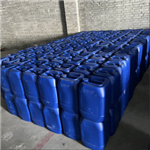
3-Methoxy-1-propanol can be used as an intermediate in organic synthesis and a pharmaceutical chemical reagent. It can be applied to the modification and derivatization of drug molecules and bioactive molecules. For example, 3-Methoxy-1-propanol can be used in the synthesis of the drug molecule rabeprazole. Rabeprazole is suitable for peptic ulcers, reflux esophagitis and Zollinger-Ellison syndrome. It has an inhibitory effect on both basal gastric acid and gastric acid secretion caused by stimulation.
3-Methoxy-1-propanol is a primary alcohol. Kinetics of the reactions of 3-methoxy-1-propanol with phenyl isocyanate in the presence of metal catalysts has been reported. Selective synthesis of 3-methoxy-1-propanol from methanol and allyl alcohol with metal oxides and zeolites catalysts in the liquid phase has been studied.
3-Methoxy-1-propanol is a primary alcohol. Kinetics of the reactions of 3-methoxy-1-propanol with phenyl isocyanate in the presence of metal catalysts has been reported. Selective synthesis of 3-methoxy-1-propanol from methanol and allyl alcohol with metal oxides and zeolites catalysts in the liquid phase has been studied.
3-Methoxy-1-propanol can be synthesised by various methods, including: O-methylation of 1,3-propanediol; diazotisation of 3-methoxy-1-propylamine followed by hydrolysis; substitution of the chlorine atom in 3-chloro-1-propanol with a methoxide ion; ring opening of 1,4-dioxane; hydroboration of allyl methyl ether, electrochemical reduction of acrolein and catalytic hydrogenation of 3-methoxy-1-propanal.
Currently, the simplest method involves using methanol and allyl alcohol as starting materials, and preparing the compound under liquid-phase conditions at 503 K for 8 hours, catalysed by an alkaline metal oxide (MgO being optimal). The key steps involve the formation of the methoxide anion from methanol, the dehydrogenation of allyl alcohol to form acrolein, the Michael addition of acrolein to the methoxide anion, and finally the hydrogenation of the aldehyde group; the highest yield achieved is approximately 23.6 per cent [1].
[1] Yamakawa, T., Takizawa, M., Ohnishi, T., Koyama, H., Shinoda, S. (2001). Selective synthesis of 3-methoxy-1-propanol from methanol and allyl alcohol with metal oxide catalysts.
Catalysis Communications,
2 6, Pages 191-194.
https://doi.org/10.1016/S1566-7367(01)00031-0