Preparation of (3-nitrophenyl)methanethiol: a solution of O-ethyl S-3-nitrobenzyl dithiocarbonate (11.55 g, 44.9 mmol) in DMSO (20 mL) was added to a DMSO (20 mL) solution of ethylenediamine (4.8 mL, 1.6 eq.) and concentrated HCl (1.8 mL, 0.5 eq.), which had been allowed to cool to room temperature previously. . The resulting mixture was stirred for 5 min and then diluted with 1 M HCl (100 mL) followed by water (300 mL) and extracted with MTBE (200 mL). The organic layer was then extracted with 5% NaOH aqueous solution (3 x 50 mL) and the combined aqueous extracts were immediately acidified with 30 mL of 37% HCl. The mixture was extracted with dichloromethane (30 mL) and the combined organic phases were dried with MgSO4, stirred with 2 g silica gel, filtered and concentrated under reduced pressure. The product was a pale yellow oil.
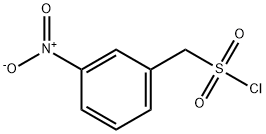
Preparation of 3-nitrophenylmethanesulfonyl chloride: m-nitrothiol (6.18 g, 36.5 mmol), dichloromethane (75 mL), and concentrated HCl (60 mL, 20 eq.) were added to the flask, and a stir bar and reflux condenser were assembled. Hydrogen peroxide (30% aqueous solution, 22 mL, 6 eq.) was then added from a homogeneous charging funnel attached to the top of the condenser. After the first 5mL of H2O2 was added, the mixture was stirred rapidly without external heat until reflux began. The remaining H2O2 was then added in 2mL portions at a rate sufficient to maintain mild reflux. After the mixture was cooled, the green organic layer was separated, carefully decolorized (exothermic) with aqueous Na2SO3, dried with MgSO4, and concentrated under reduced pressure. The residue was recrystallized with benzene-cyclohexane. The product was colorless crystals. Yield 6.60 g (28.0 mmol, 77%).