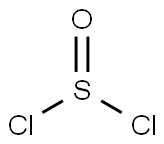
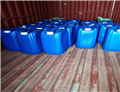
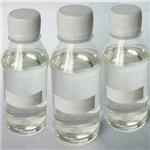
Thionyl chloride, at room temperature and pressure, is a colorless or pale yellow liquid with a pungent odor. It has a relative density of 1.676, melting point of-104.5 ℃ and the boiling point of 78.8 ℃. Upon coming across water, it is easily decomposed into sulfur dioxide and hydrogen chloride. It is soluble in benzene, chloroform and carbon tetrachloride. It begins to decompose upon being heated to 150 °C with complete decomposition at 500°C. Thionyl chloride sometimes can be easily confused with thionyl chlorine (SO2Cl2). However, these two compounds actually have a large difference in their chemical nature with its chlorine atom having a strong substitution capacity on hydroxyl group or sulfur group. Thionyl chloride can form corresponding chlorides with hydroxyl-containing phenol or hydroxyl-containing alcohol to form the corresponding chlorides; it can have reaction with Grignard reagent to generate the corresponding sulfoxide compound. The molecular structure of thionyl chloride is cone type wherein the sulfur (VI) center contains one lone pair of electrons. However, COCl2 has planar configuration. Owing to the strong reaction between the thionyl chloride and water, SOCl2 does not exist in nature.
Thionyl chloride crude product often contains impurities including sulfuryl chloride, sulfur monochloride and sulfur dichloride. In order to obtain a higher purity of thionyl chloride, sulfur powder has to be added for refluxing and distillation to obtain high-purity chloride sulfoxide. The detailed mechanisms of reactions remain to be unclear. According to my analysis, it may be that it can prevent the thionyl chloride being decomposed into sulfur dichloride, sulfur dioxide and chlorine during the process of distillation. The detailed purification method is that: put together of 450 ml of thionyl chloride with 12.5g of sulfur powder for being heated under reflux for 4.5 hours, followed by efficient fractionating column for twice to obtain pure colorless. Alternatively, you can also apply distillation purification in the presence of triphenyl phosphite. The removed impurities should be sulfuryl chloride, sulfur monochloride and sulfur dichloride.
Thionyl chloride is an important intermediate of organic chemistry and is mainly used in medicine, pesticides, dyes and industrial organic synthesis industry as chlorinating agent. Consumption structure: the pharmaceutical industry accounted for 25%, pesticide industry accounted for 50%, dyestuff industry accounted for 5% and other industries accounted for 20%. The pesticide industry contributes the major part for consumption of thionyl chloride and is mainly used for the production of inabenfide, valerate, fenvalerate, mosquito-killing dimerthrin, flucythrinate, diflubenzuron, isocarbophos, fenpropathrin, endosulfan, deltamethrin, a (b) group chlorpyrifos, oxazolidinone, quizalofop and warfarin.
Because thionyl chloride can have fierce reaction with water, it is able to have reaction with metal chloride hydrated salt for production with anhydrous metal chlorides. MCln • xH2O + x SOCl2 → MCln + x SO2 + 2x HCl
Thionyl chloride was subjected heating reflux with a transition metal oxide and can further generate the corresponding oxychloride of the metal: WO3 + 2SOCl2 → WOCl4 + 2SO2
Thionyl chloride has been widely used for converting alcohol and the carboxylic acid into the corresponding acid chloride and chlorinated hydrocarbons. Compared with other agents (such as phosphorus penta-chloride), thionyl chloride is often the preferred reagents, because both the reaction product of sulfur dioxide and hydrogen chloride are gaseous and is easily to be separated. The excess amount of thionyl chloride can be removed by distillation. RC (= O)-OH + O = SCl2 → RC (= O)-Cl + SO2 + HCl R-OH + O = SCl2 → R-Cl + SO2 + HCl. Sulfoacid can react with thionyl chloride to generate sulfonyl chloride. Sulfinic acid can have reaction with thionyl chloride to generate sulfinyl chloride. Phosphonic acid can have reaction with thionyl chloride to generate phosphine chloride.
Thionyl chloride can react with mono-substituted formamide to generate the corresponding isonitriles. Amide can react with thionyl chloride to generate imine acyl chloride. Primary amide, upon co-heating with thionyl chloride, will be further dehydrated to become nitrile.
The above information is edited by the Chemicalbook of Dai Xiongfeng.
Currently there are major approaches for industrial production of thionyl chloride including chlorosulfonic acid method, sulfur dioxide gas-phase method and phosphorus oxychloride cogeneration.
Fixed consumption amount:
Production methods raw material and specifications consumption quota/t • t-1
Chlorosulfonic acid method chlorosulfonic acid (95%) 1.1
Liquid chlorine (99%) 0.91
Sulfur powder (99.5%) 0.42
Fumed sulfur dioxide (99.5%) 0.22
Liquid chlorine (99%) 0.88
Sulfur dioxide (99%) 0.44
Cogeneration phosphorus oxychloride, phosphorus trichloride (98%) 1.3
Liquid chlorine (99%) 0.66
Sulfur dioxide (99%) 0.64
Thionyl chloride is toxic and is corrosive and has tearing property.
Pathways: inhaled, ingested, percutaneous absorption.
Health hazard: inhalation, oral administration or percutaneous absorption is harmful to our health. The eyes, skin, mucosa and respiratory tract have a strong stimulating effect and can cause burn wound. After inhalation, it may be lethal due to causing the spasm and dropsy of throat and bronchial. Poisoning performance includes burning sensation, coughing, wheezing, and dizziness, and laryngitis, shortness of breath, headache, nausea and vomiting.
Acute toxicity: LC50: 2435 mg/m3 (rat inhalation)
Irritation: a rabbit eyes: 1380 μg, severe stimulation.
Protective: This product can burn the skin and is irritable to the mucous membrane. During operation, the worker should wear protective equipment and should wash immediately with plenty of water if being splashed on skin.
First-aid
Skin contact: Immediately remove contaminated clothing, rinse with plenty of water for at least 15 minutes. Then go for medical treatment.
Eye contact: immediately lift up eyelid; wash with large flows of water or saline thoroughly for at least 15 minutes. Then go for medical treatment.
Inhalation: rapidly leave the scene to place with fresh air. Keep the airway open. If breathing is difficult, give oxygen. If breathing stops, immediately apply artificial respiration and send for medical treatment.
Ingestion: for misusage people, immediately rinse the mouth with water and drink milk or egg white. Then go for medical treatment.
How to deal with the wasted thionyl chloride so that the environment is not affected
It is recommended for distillation recycling. If you want to deal with it, you can add it slowly into ice water for decomposition into SO2 and HCL which are subject to further treatment.
If the amount of the wasted thionyl chloride is large, you can consider recycle or sold outside for treatment. If the amount is small, you can add it drop wise into the alkaline water for decomposition and neutralization.
Packaging: glass or plastic barrels (tank) full open drums; glass or plastic bucket (cans); outside: the ordinary wooden box or wooden grille half; frosted glass bottles or threaded glass; outside: the ordinary wooden box; ampoules; outside: ordinary wooden box.
Storage precautions: for railway transport, it should be subject to package strictly in accordance with the dangerous cargo form in the <> (Ministry of railway of china). Upon the shipment, the packaging should be complete and the loading should be safe. During the process of transport, we should ensure that the container does not leak, does not fall off and does not been broken. It is not allowed to mix it with alkali or edible chemicals for operation and transport. During the transport, the transport vehicles should be equipped with spill response equipment. During the transport process, we should prevent sunshine exposure, rain and high temperature. During the road transport, the vehicles should be driven according to the provided routes with no stopping in residential areas and densely populated areas. It should be stored in a cool, ventilated warehouse with the storage temperature being not exceed 25 ℃ and the relative humidity being less than 75%. Keep the container closed. Moreover, we should store it separately from bases and avoid mixing for storage. Storage areas should be equipped with spill response equipment and suitable host materials.
It is colorless or light yellow volatile liquid with a strong suffocating odor. It can also be miscible with benzene, chloroform and carbon tetrachloride.
It can be applied to medicine, pesticide and dye industries and mainly used for the production of isocarbophos, sumicidin, propargite tetramisole hydrochloride, indomethacin, and vitamin A, etc.
It can be used as the chlorinating agents for organic synthesis such as chlorination of alcoholic hydroxyl group, chlorination of carboxylic acid, chlorination of acid anhydride and the chlorine displacement of organic sulfonic acid or carboxylic acid. It can also be used for making acyl chloride as well as being used for the manufacture of pharmaceutical intermediates such as tetramisole hydrochloride and synthomycin palmitate. It can also be used as a dehydrating agent or solvent.
It can be produced with the reaction between sulfur trioxide and sulfur dichloride.
Chlorosulfonic acid method: first add sulfur powder to the reactor, put through the chlorine gas for reaction to generate sulfur monochloride. Then add a certain amount of chlorine acid and sulfur monochloride to the reactor; put through chlorine gas at below 50 ℃ for reaction; the resulted mixture was further subject to the crude distillation and condensation; further collect the material liquid below 130 ℃ and feed to the distillation pot; in order to make the low-boiling sulfur dichloride be convert to sulfur chloride for further being left in the pot, then you have to add 15% to 20% the amount of the crude product of sulfur and then send for distillation; reflux for 4h until giving normal color; collect the fraction between 75-80 ℃ to obtain the finished product. The reaction equation is:
2ClSO3H + S2C12 + C12 → 2SOC12 + 2SO2 + 2HCl
Sulfur dioxide method: take sulfur, liquid chlorine and liquid sulfur dioxide as raw material; apply whole-cycle and liquid circulation method for production of high-purity alumina thionyl chloride with a purity of 99%; this method has advanced technology, high product quality and releases less "three wastes".
TWA 1 PPM (5 mg/cubic meter); STEL 1 PPM (5 mg/m3)
Thionyl chloride is a pale yellow to reddish liquid. Suffocating odor like sulfur dioxide. Fumes form when exposed to moist air.
Pale yellow to red fuming liquid; suffocating odor; refractive index 1.517 at 20°C; density 1.631 g/mL at 20°C; freezes at -101°C; boils at 75.6°C; decomposes at 140°C; decomposes in water; soluble in benzene, chloroform, and carbon tetrachloride.
Thionyl chloride (SOCl2) is used as a chlorinating agent in
manufacturing organic compounds. It is also used as a
solvent in high-energy lithium batteries.
In the manufacture of
lithium batteries; in the synthesis of herbicides,
surfactants, drugs, vitamins, and dyestuffs.
For making acyl chlorides, to replace OH or SH groups with chlorine atoms; reacts with Grignard reagents to form the corresponding sulfoxides. Review of use in organic synthesis: J. S. Pizey, Synthetic Reagents vol. 1 (John Wiley, New York, 1974) pp 321-357.
Sulfurous oxychloride can be prepared by oxidation of sulfur dichloride with sulfur trioxide: SCl2 + SO3 → SOCl2 + SO2
Also, the compound can be prepared by reacting sulfur dioxide with phosphorus pentachloride: SO2 + PCl5 → SOCl2 + POCl3.
ChEBI: Thionyl chloride is a sulfinyl halide in which both of the halide atoms are chorines. It is a sulfinyl halide and a chlorine molecular entity.
Thionyl chloride appears as a colorless to yellow fuming liquid with a suffocating pungent odor. Boiling point 79 °C. A lachrymator. Highly corrosive and toxic. Long-term inhalation of low concentrations or short-term inhalation of high concentrations has adverse health effects.
Thionyl chloride reacts, potentially explosively, with dimethyl sulfoxide or dimethylformamide containing traces of iron or zinc [Spitulnik, M. J., Chem. Eng. News, 1977, 55(31), p. 31]. Undergoes violent reactions with bases (ammonia, sodium hydroxide, potassium hydroxide, amines), alkali metals (sodium, potassium), esters (ethyl acetate), toluene mixed with ethanol / water [Bretherick, 5th ed., 1995, p. 1325]. Has an expansion ratio from gas to liquid of nearly 1000:1. Hence may cause an explosion if heated while contained [MCA Case History No. 1808]. May react vigorously or explosively if mixed with diisopropyl ether or other ethers in the presence of trace amounts of metal salts [J. Haz. Mat., 1981, 4, 291]. Perchloric acid ignites on contact with sulfinyl chloride. (Bailar, 1973, Vol. 2, 1442). SOCl2 reacts with esters, such as ethyl acetate, forming toxic SO2 gas and water soluble/toxic acyl chlorides, catalyzed by Fe or Zn (Spagnuolo, C.J. et al. 1992. Chemical and Engineering News 70(22):2.).
Strong irritant to skin, tissue, and upper
respiratory tract.
CORROSIVE and/or TOXIC; inhalation, ingestion or contact (skin, eyes) with vapors, dusts or substance may cause severe injury, burns or death. Fire will produce irritating, corrosive and/or toxic gases. Reaction with water may generate much heat that will increase the concentration of fumes in the air. Contact with molten substance may cause severe burns to skin and eyes. Runoff from fire control or dilution water may cause pollution.
EXCEPT FOR ACETIC ANHYDRIDE (UN1715), THAT IS FLAMMABLE, some of these materials may burn, but none ignite readily. May ignite combustibles (wood, paper, oil, clothing, etc.). Substance will react with water (some violently), releasing corrosive and/or toxic gases and runoff. Flammable/toxic gases may accumulate in confined areas (basement, tanks, hopper/tank cars, etc.). Contact with metals may evolve flammable hydrogen gas. Containers may explode when heated or if contaminated with water. Substance may be transported in a molten form.
Flammability and Explosibility
Non flammable
Moderately toxic by
inhalation. The material itself is more toxic
than sulfur dioxide. Has a pungent odor
similar to that of sulfur dioxide; it fumes
upon exposure to air. Violent reaction with
water releases hydrogen chloride and sulfur
dioxide. Both these decomposition products
constitute serious toxicity hazards. A
corrosive irritant that causes burns to the
skin and eyes. A powerful chlorinating
agent. Potentially explosive reaction with
ammonia, bis(dimethy1amino)sulfoxide -
(above 80℃), chloryl perchlorate, 1,2,3-
cyclohexanetrione trioxime + sulfur dioxide,
dimethyl sulfoxide, hexafluoroisopropylideneaminolithium.
Violent reaction or
ignition with 2,4-hexadiyn-1-6-di01, onitrobenzoyl
acetic acid, o-nitrophenylacetic
acid, sodum (ignites at 300℃).
Incompatible with ammonia, dimethyl
formamide + trace iron or zinc, linseed oil +
quinoline, toluene + ethanol + water. When
heated to decomposition it emits toxic
fumes of SOx and Cl-. See also
HYDROGEN CHLORIDE and SULFUR
DIOXIDE.
Thionyl chloride is used as specialty chlorinating agent, particularly in preparation of organic acid chlorides; in organic synthesis; as a catalyst.
UN1836 Thionyl chloride, Hazard class: 8; Labels: 8-Corrosive material.
Crude SOCl2 can be freed from sulfuryl chloride, sulfur monochloride and sulfur dichloride by refluxing it with sulfur and then fractionally distilling twice. [The SOCl2 is converted to SO2 and sulfur chlorides. The S2Cl2 (b 135.6o) is left in the residue, whereas SCl2 (b 59o) passes over in the forerun.] The usual purification is to distil it from quinoline (50g SOCl2 to 10g quinoline) to remove acid impurities, followed by distillation from boiled linseed oil (50g SOCl2 to 20g of oil). Precautions must be taken to exclude moisture. Thionyl chloride is used extensively in organic syntheses and can be prepared by distillation of technical SOCl2 in the presence of diterpene (12g/250mL SOCl2), and avoiding overheating. Further purification is achieved by redistillation from linseed oil (1-2%) [Rigby Chem Ind (London) 1508 1969]. Gas chromatographically pure material is obtained by distillation from 10% (w/w) triphenyl phosphite [Friedman & Wetter J Chem Soc (A) 36 1967, Larsen et al. J Am Chem Soc 108 6950 1986]. HARMFUL VAPOURS.
Reacts violently with water releasing sulfur dioxide and hydrogen chloride. Keep away from water, acids, alcohols, alkalis, ammonia, chloryl perchlorate.
Spray on a thick layer of a (1:1) mixture of dry soda ash and slaked lime behind a shield. After mixing, spray water from an atomizer with great precaution. Transfer slowly into a large amount of water. Neutralize and drain into the sewer with sufficient water.