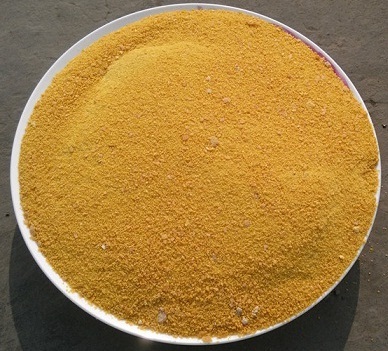
The main physical and chemical properties of the Poly aluminium chloride are demonstrated from alkalized degree, pH value, Al2O3 content and density.
Alkalized degree (B) and pH: alkalized degree means the degree of Cl-(in poly aluminium chloride) being substituted by OH-; it is generally represented using the ratio of the hydroxyl group percentage over aluminum, namely, B = [OH]/3 [Al] × 100%.
Many features of the Poly aluminium chloride are closely related to its alkalized degree including the degree of polymerization, pH, storage stability and the cementing property of being used as a cementing agent. But we should note that the alkalized degree only represents a statistical average value from the mixture containing various kinds of poly aluminium chloride with different degrees of polymerization.
The pH value of the liquid Poly aluminium was similar with its alkalized degree. However, these two parameters don’t have exactly the same meaning. The alkalized degree indicates the number of hydroxyl groups bound within the poly aluminium structure while the pH value of the solution indicates the number of the free hydroxyl ions OH. But, anyway, the pH value of the poly aluminium solution generally increases with increased alkalized degree.
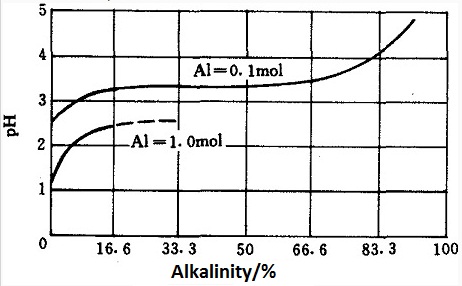
Figure 2 the relation between the alkalized degree and pH values.
For solution with the same alkalized degree, when the concentration varies, the pH value also changes and decreases with the increased concentration of the solution. For example, for the poly aluminium chloride (PAC) and ACl3 solution with the alkalized degree of stock solution being 50%, its pH value changes when diluted to different concentrations.
The Al2O3 content, density and viscosity: there is a certain relationship between the Al2O3 content of the poly aluminium chloride and its density. The density of the solution will increase with the increased Al2O3 content, exhibiting as a linear relationship.
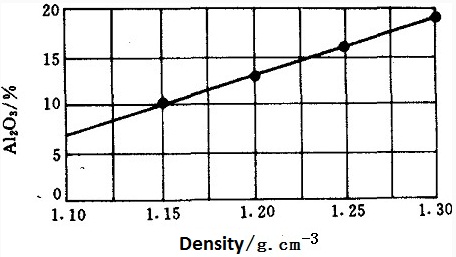
Figure 3 the relation of the density of poly aluminium chloride with its Al2O3 content
The relationship between the density, pH value and viscosity of poly aluminium chloride as follows: the greater the density, the greater pH value as well as the higher the viscosity (dynamic viscosity coefficient).

Figure 4 the relation between the density, pH and viscosity of poly aluminium chloride