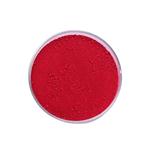
Acid Red 51 is brightly colored, has good tinting strength and stability, and is inexpensive, making it commonly used in processed food products and beverages. Because it is poorly absorbed in the digestive tract, it was previously considered a relatively safe synthetic pigment. However, Acid Red 51 actually has strong toxicity, exceeding that of the aforementioned red pigments (carmine, allura red, and amaranth). Its LD50 is 1.9 g/kg orally in rats. Later studies found that in addition to being carcinogenic and teratogenic, long-term intake of Acid Red 51 can also interfere with and damage the human nervous system, easily causing adverse symptoms such as hyperactivity, mood instability, poor concentration, poor self-control, behavioral abnormalities, sleep disorders, and loss of appetite.
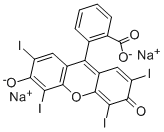
ChEBI: Erythrosin B is an organic sodium salt that is the disodium salt of 2-(2,4,5,7-tetraiodo-6-oxido-3-oxo-8a,10a-dihydroxanthen-9-yl)benzoic acid. It has a role as a fluorescent dye. It contains an erythrosin(2-).