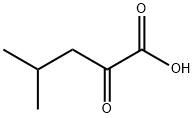
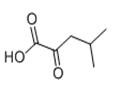
Reported found in banana, asparagus, cheese, white wine, cocoa, blue cheese and provolone cheese.
4-Methyl-2-oxovaleric acid is an intermediate in the metabolism of leucine and also used as flavoring agents.
ChEBI: A 2-oxo monocarboxylic acid that is pentanoic acid (valeric acid) substituted with a keto group at C-2 and a methyl group at C-4. A metabolite that has been found to accumulate in maple syrup urine disease.
4-Methyl-2-oxopentanoic acid (4 mol/L; ICV; 1 h and 15 d) causes impairment of habitual memory and long-term memory in rats[3].
4-Methyl-2-oxopentanoic acid (400 μmol/kg/h; carotid arch injection; single dose injection 60 min) increases porcine skeletal muscle protein synthesis and plasma leucine levels[4].
| Animal Model: | Thirty-day-old rats were anesthetized with a mixture of ketamine and xylazine (HY-B0443)[3] |
| Dosage: | 4 mol/L, Administer 2 μL |
| Administration: | Intracerebroventricular injection (ICV); 1 h and 15 days |
| Result: | Increased TBARS levels, protein carbonyl content and DNA damage in the hippocampus, striatum and cerebral cortex.
SOD activity in the hippocampus and striatum increased 1 hour after injection, and SOD activity in the striatum decreased 15 days later.
|
| Animal Model: | Piglets were deprived of feed for 12-14 hours before infusion[4] |
| Dosage: | 400 μmol/kg |
| Administration: | Inject into the aortic arch; the initial injection dose is 148 μmol/kg in the first 10 minutes, and the continuous infusion dose is 400 μmol/kg |
| Result: | Increased phosphorylation of eukaryotic initiation factor (eIF) 4E binding protein-1 (4E-BP1) and eIF4G in skeletal muscle and increased the formation of active eIF4G×eIF4E complexes. |
Human Endogenous Metabolite