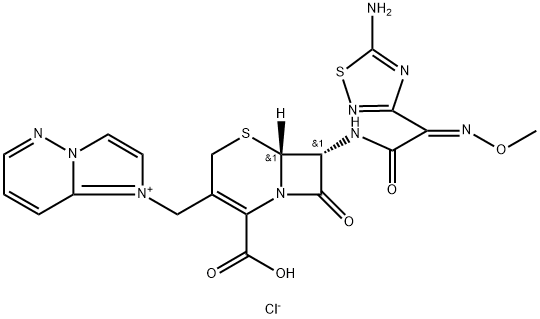
Cefozopran (SCE-2787) hydrochloride is a semi-synthetic, parenteral, fourth-generation cephalosporin. Cefozopran hydrochloride, an antibiotic, has a broad spectrum of antibacterial activity, inhibiting most of the gram-negative and gram-positive organisms[1][2].
Cefazolam hydrochloride is suitable for Staphylococcus, Streptococcus, Enterococcus, Peptostreptococcus, Escherichia coli, Enterobacter, Serratia, Klebsiella, Citrobacter, Proteus, Pseudomonas, Influenza Bacillus, Acinetobacter, Bacteroidetes, septicemia caused by sensitive bacteria to cefazolam hydrochloride, trauma infection, respiratory system, urinary system and abdominal cavity, pelvic purulent inflammation, ophthalmology and ENT inflammation, etc.
Cefozopran (SCE-2787) hydrochloride is a semi-synthetic, parenteral, fourth-generation cephalosporin. As an antibiotic, it has broad-spectrum antibacterial activity and can inhibit most Gram-negative and Gram-positive bacteria.
[1] Sato T, et al. A prospective, randomized study comparing cefozopran with piperacillin-tazobactam plus ceftazidime as empirical therapy for febrile neutropenia in children with hematological disorders. Pediatr Blood Cancer. 2008;51(6):774-777. DOI:
10.1002/pbc.21692[2] Iizawa Y, et al. Therapeutic effect of cefozopran (SCE-2787), a new parenteral cephalosporin, against experimental infections in mice. Antimicrob Agents Chemother. 1993;37(1):100-105. DOI:
10.1128/AAC.37.1.100