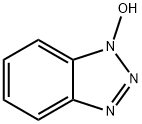
In a dry reaction flask, hydrazine hydrate (1.2 mL, 25 mmol) was added to a solution of o-nitrochlorobenzene (5 mmol) in 1-heptanol (10 mL), and the solution was stirred at 110–120 °C for 5 hours. After the reaction was complete, the reaction mixture was neutralized with 40% NaOH aqueous solvent, and excess hydrazine and 1-heptanol were removed under reduced pressure. The resulting residue was adjusted to pH 3.2–3.5 with 1M hydrochloric acid. The precipitate was collected by filtration, washed with cooled 5% sodium chloride aqueous solution, and finally purified by recrystallization of the precipitate in dichloromethane and methanol to obtain the target product molecule.
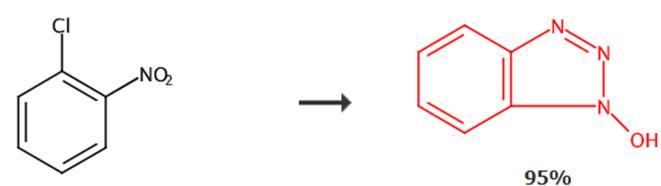
Figure 1. Synthetic Route of 1-Hydroxybenzotriazole (HOBT)
white to light yellow powder
additive for oligonucleotide couplings and in racemization-free peptide couplings
1-Hydroxybenzotriazole (HOBT) is used in preparation method of carbon fiber/polyamide composite powder material for laser sintering.
ChEBI: 1-Hydroxybenzotriazole is a member of benzotriazoles.
Flammability and Explosibility
Not classified
hydroxy benzotriazole, abbreviated hobt, is anorganic compoundthat is a derivative of benzotriazole. hobt, as a commercial product, is a white crystalline powder contains some water (~11.7% wt as the hobt monohydrate crystal). it is mainly used to suppress the racemization of single-enantiomerchiral molecules and to improve the efficiency ofpeptide synthesis. automated peptide synthesisinvolves the condensation of the amino group of protected amino acidswith the activated ester. hobt can be used to produce activated esters such as n-hydroxysuccinimide ester. these esters are insoluble and react with amines at ambient temperature to give amides [1]. hobt is also used for the synthesis of amides from carboxylic acidsaside from amino acids. these substrates may not be convertible to theacyl chlorides [2]. for instance amide derivatives of ionophoric antibiotics have been prepared in this way [3].
Crystallise HOBt from aqueous EtOH or water. [Boyle & Jones J Chem Soc Perkin Trans II 160 1973, Tomita & Ikawa J Pharm Soc Jpn 75 449 1955, Beilstein 26 III/IV 95.]
[1]. knig w, geiger r. eineneuemethodezursynthese von peptiden: aktivierung der carboxylgruppemitdicyclohexylcarbodiimidunterzusatz von 1‐hydroxy‐benzotriazolen[j]. chemischeberichte, 1970, 103(3): 788-798.
[2]. myers a g, yang b h, chen h. transformation of pseudoephedrine amides into highly enantiomerically enriched aldehydes, alcohols, and ketones[j]. organic syntheses, 2000: 29-29.
[3]. owicki d, huczyński a, ratajczak-sitarz m, et al. structural and antimicrobial studies of a new n-phenylamide of monensin a complex with sodium chloride[j]. journal of molecular structure, 2009, 923(1): 53-59.