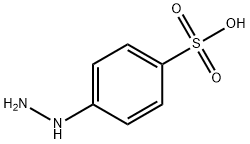
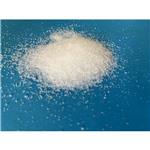
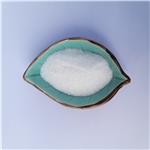
4-Hydrazinobenzenesulfonic acid forms white to light yellow crystalline powder. Its melting point is 286°C. It dissolves readily in boiling water but is only sparingly soluble in water at room temperature. It is also slightly soluble in ethanol and diethyl ether.
4-Hydrazinobenzenesulfonic Acid is used as an intermediate to manufacture pharmaceuticals, dyes and other organic synthesis. They have active applications in organic synthesis for agrochemicals, pharmaceuticals, photographic, heat stabilizers, polymerization catalysts, flame-retardants, blowing agents for plastics, explosives, and dyes.
Hemihydrate of 4-Hydrazinobenzenesulfonic Acid is used in analytical experiments to determine trace components of mixtures. Also used in the synthesis of inhibitors of coxsackievirus B3 replication. Tartrazine (T007700) analog.
Synthesis of 4-Hydrazinobenzenesulfonic acid: Sodium 4-aminobenzenesulfonate was used as the starting material. It was mixed with water and 30% hydrochloric acid, and the mixture was cooled to 2°C. A sodium nitrite solution was then added dropwise at 0–5°C to achieve diazotization. The resulting diazonium salt solution was transferred into a mixture of sodium hydroxide solution and sodium metabisulfite, maintaining the feed temperature at 80–85°C and the pH between 6.2 and 6.7. After the addition was complete, the reaction mixture was stirred for an additional 1.5 hours. Subsequently, zinc powder and diatomaceous earth were added. The mixture was stirred and then filtered. The filtered reaction product was finally treated with acid to afford 4-hydrazinobenzenesulfonic acid.