Preparation of 1-Methylnaphthalene
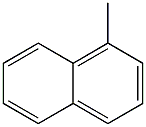
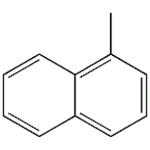
The methylnaphthalene fraction with a distillation range of 240-245℃ is separated from the wash oil fraction of the distillation. The methylnaphthalene fraction is cooled to -20℃, and crude 2-methylnaphthalene crystals are separated. The resulting mother liquor is used to extract 1-methylnaphthalene. After sulfonation with 95-98% concentrated sulfuric acid, the unsulfonated oil is separated and removed. Then, water is added for dilution, and 1-methylnaphthalene sulfonic acid crystals are precipitated at 10℃. After filtration of the crystals, they are hydrolyzed with superheated steam at 125-150℃ to remove the aqueous layer, yielding industrial-grade 1-methylnaphthalene with a purity of 85-90%. Repeated sulfonation and hydrolysis of industrial-grade 1-methylnaphthalene 2-3 times can yield 1-methylnaphthalene with a purity greater than 98%.
Preparation of 2-Methylnaphthalene
The methylnaphthalene fraction with a distillation range of 240–245 °C is separated from the wash oil fraction of the distillation. The methylnaphthalene fraction is cooled to -20 °C to separate crude 2-methylnaphthalene crystals. The crude 2-methylnaphthalene is recrystallized from ethanol or methanol. The obtained crystals are centrifuged and heated to melt and filter to remove impurities, yielding 2-methylnaphthalene with a purity of over 97%.
1-Methylnaphthalene is used as a surfactant, heat transfer fluid, pharmaceutical intermediate, and sulfur extractant for vinyl chloride fiber and polyester dyeing carriers. It can also be used in the production of plasticizers and fiber dyeing auxiliaries. It can also be used as a diesel cetane number tester, a solvent for pesticides, and a solvent for anthraquinone hydrogen peroxide production. It can also be used to produce the plant growth regulator 1-naphthaleneacetic acid. 2-Methylnaphthalene is mainly used in the production of vitamin K3, polyester fiber chromosome carriers, fiber dyeing auxiliaries, organic pigments, concrete additives, detergents, emulsifiers, hemostatic agents, wetting agents, plant growth regulators, beverage additives, feed additives, oral contraceptives, and color film dyes. 3. Mixed Methylnaphthalene can be used as a raw material for pharmaceuticals and surfactants. Furthermore, methylnaphthalene can be catalyzed with HF/BF3 to prepare mesophase pitch, which is a high-quality raw material for carbon fiber production.