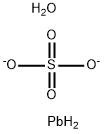
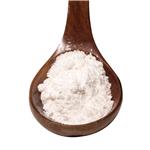
Lead sulfate is a heavy, white crystalline powder.
white or off-white powder
Applications for tribasic lead sulfate stabilizers include thermal stabilization of flexible PVC wire insulation compounds containing phthalate-type plasticizers, wire insulation designed to meet Underwriters Laboratories specifications through 80 C, rigid and flexible PVC foams, rigid vinyl profiles, and PVC plastisols. The usual range of tribasic lead sulfate required in PVC is between two and seven parts per hundred of resin (2 7 phr), depending on the intended application of the vinyl product.
Flammability and Explosibility
Not classified
1. Waste lead paste is washed with water to remove acid.
2. Deacidified lead paste and lead oxide powder are added to hot water in a specific ratio to form a slurry.
3. Dilute sulfuric acid is added dropwise to the slurry at 75-80C. After holding the temperature, the mixture is filtered.
4. The precipitate is dried and milled to obtain tribasic lead sulfate. The feed ratio follows specific molar relationships.
Lead sulfate is used in storage batteries and paint pigments. Used in the making of alloys, fastdrying oil varnishes; weighting fabrics; in lithography
UN2291 Lead compounds, soluble n.o.s., Hazard
Class: 6.1; Labels: 6.1-Poisonous materials, Technical
Name Required. UN1794 Lead sulfate with more than 3%
free acid, Hazard class: 8; Labels: 8-Corrosive material.
UN3077 Environmentally hazardous substances, solid, n.o.
s., Hazard class: 9; Labels: 9-Miscellaneous hazardous
material, Technical Name Required
Incompatible with oxidizers (chlorates,
nitrates, peroxides, permanganates, perchlorates, chlorine,
bromine, fluorine, etc.); contact may cause fires or explosions. Contact with potassium can cause explosion. Keep
away from alkaline materials, strong bases, strong acids,
oxoacids, and epoxides