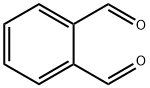
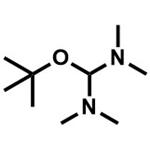
o-Phthalaldehyde is a pale yellow crystalline solid.
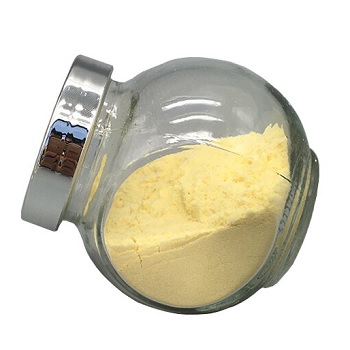
o-Phthalaldehyde is mainly used as a high-level disinfectant (a low-temperature chemical method) for heat-sensitive medical and dental equipment such as endoscopes and thermometers; in recent years, it has gained popularity as a safe and better alternative to glutaraldehyde.
There are some researches show, pH7.5 contains the sterilizing agent of o-phthalaldehyde 0.5%, and its sterilizing power, sterilization speed, stability and toxicity all are better than glutaraldehyde, can kill mycobacterium in the 5min, the bacterium number reduces by 5 logarithmic value, and o-phthalaldehyde is very stable, tasteless in pH3~9 scopes, non-stimulated to human nose, eye mucosa, and need not activate before using, various materials are had good consistency, have tangible microbiocidal activity.
o-Phthalaldehyde can be widely used for precolumn derivatization of amino acids in HPLC separation or Capillary electrophoresis. For flow cytometric measurements of protein thiol groups.
Disinfectant. Reagent in fluorometric determination of primary amines and thiols.
Precolumn derivatization reagent for primary amines and amino acids. The fluorescent derivative can be detected by reverse-phase HPLC. The reaction requires OPA, primary amine and a sulfhydryl. In the presence of excess sulfhydryl, amines can be quantitated. In the presence of excess amine, sulfhydryls can be quantitated.
o-Phthalaldehyde is a high-level chemical disinfectant that is commonly used for disinfection of dental and medical instruments as an alternative to glutaraldehyde, which is a known skin and respiratory sensitizer.
A variety of processes for manufacturing o-phthalaldehyde have been reported in the literature.
o-Phthalaldehyde is produced by heating pure benzaldehyde and chloroform with potassium hydroxide solution. The resulting solution is further acidified with hydrochloric acid and cooled to yield a colorless powder of o-phthalaldehyde.
It is also produced by ozonization of naphthalene in alcohol followed by catalytic hydrogenation.
Catalytic oxidation of various chemicals is also used in manufacturing o-phthalaldehyde. o-Phthalaldehyde can be manufactured by oxidation of phthalan by nitrogen monoxide in acetonitrile with N-hydroxyphthalimide as the catalyst to yield 80% to 90%.
ChEBI: A dialdehyde in which two formyl groups are attached to adjacent carbon centres on a benzene ring.
Using o-phthalaldehyde (OPA) in combination with a thiol reagent is a standard method for detecting primary amines in amino acids, peptides, and proteins. O-phthalaldehyde, in the presence of 2-mercaptoethanol, reacts with primary amines to form highly fluorescent products. Picomole quantities of amino acids, peptides, and proteins can be detected easily. o-Phthalaldehyde is five to ten times more sensitive than fluorescamine and is soluble and stable in aqueous buffers. Despite its widespread use, the exact reaction mechanism has been debated since the 1980s. Rovelli's results support the mechanism originally proposed by Sternson and Wong, in which the primary amine first reacts with OPA, followed by a reaction with the thiol to form the fluorescent isoindole product[1-2].
o-Phthalaldehyde (OPA)-amine reaction and OPA-amine-thiol reaction have been developed to effectively modify native peptides and proteins under the physiological conditions. First, OPA and its derivatives can rapidly and smoothly react with primary amine moieties in peptides and proteins to achieve native protein biconjugations. Furthermore, OPA-alkyne bifunctional linkers can be used for proteome profiling. Second, OPA-amine-thiol three-component reaction has been developed for chemoselective peptide cyclization, directly on unprotected peptides in the aqueous buffer. Moreover, this OPA-guided cyclic peptide can be further modified with the N-maleimide moiety in one pot to introduce additional functionalities[3].
Flammability and Explosibility
Not classified
Phthaldialdehyde can be used for the pre-column derivatization of amino acids for high-performance liquid chromatography (HPLC) separation. It may also be used for flow cytometric measurements of protein thiol groups.
Biotechnological Applications
O-phthalaldehyde(OPA) is used for precolumn derivatization of amino acids for HPLC separation and for flow cytometric measurements of protein thiol groups. Used for fluorometric determination of histamine, histidine and other amino acids. Also used for cholesterol assay in the picomole range.
Phthaldialdehyde has been used:
in the preparation of O-phthaldialdehyde reagent for analysing gentamycin content.
in the preparation of reagent for determining the degree of hydrolysis of milk proteins.
in the measurement of free amino acids of milk samples by O-phthaldialdehyde/N-acetyl-L-cysteine (OPA/NAC) assay.
in the derivatization of putrescine samples.
The primary routes of human exposure to o-phthalaldehyde are by inhalation and through the skin, which may occur through accidental or occupational exposures. Along with its increasing popularity as a chemical sterilizer, o-phthalaldehyde has many applications in analytical methods and in diagnostic kits. o-Phthalaldehyde is also used as an intermediate in the synthesis of pharmaceuticals and as a reagent in the tanning industry, hair colorings, wood treatment, and antifouling paints. o-Phthalaldehyde was approved for use as an indoor antimicrobial pesticide in 1997; however, it is no longer registered with the United States Environmental Protection Agency (USEPA) for this use.
No information on the carcinogenicity of o-phthalaldehyde in experimental animals or humans was found in a review of the literature.
[1] Grazia Rovelli, Kevin R Wilson. “Elucidating the Mechanism for the Reaction of o-Phthalaldehyde with Primary Amines in the Presence of Thiols.” The Journal of Physical Chemistry B 127 14 (2023): 3257–3265.
[2] J R Benson, ;P E Hare. “O-phthalaldehyde: fluorogenic detection of primary amines in the picomole range. Comparison with fluorescamine and ninhydrin.” Proceedings of the National Academy of Sciences of the United States of America 72 2 (1975): 619–22.
[3] “Chemical Tools for Imaging, Manipulating, and Tracking Biological Systems: Diverse Methods for Optical Imaging and Conjugation.” Methods in enzymology 1 1 (1900).