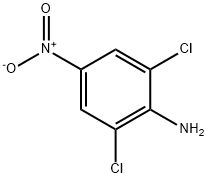
Dicloran is a protective fungicide. It has a low aqueous solubility and is volatile. Based on its chemical properties, it may leach to groundwater. It can also be quite persistent in soils but not usually so in water. It is moderately toxic to mammals but is not expected to bioaccumulate. Exposure may damage reproduction and/or development. Dicloran is moderately toxic to most aquatic organisms, birds, honeybees and earthworms.
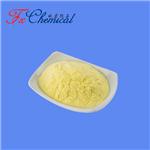
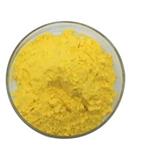
Dicloran is a yellow crystalline solid or power.
Odorless.
yellow granular powder and chunks
Dichloran is a component for pesticide formulations.
It is used as dyestuff, agricultural and pharmaceutical intermediate.
Dicloran is a protectant fungicide used to control various rots
pathogens (Botrytis, Monilinia, Rhizopus and Sclerotinia) in a wide
variety of fruits and vegetables.
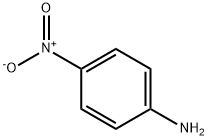
ChEBI: A nitroaniline that is 4-nitroaniline in which the hydrogens at positions 2 and 6 are replaced by chlorines. An agricultural fungicide, it is not approved for use in the European Union.
Fungicide: Used to control fungi on a variety of crops. The top
crop usages in California are on celery, head lettuce, and
grapes (table, wine and raisin). Not approved for use in
EU countries. Actively registered in the U.S. Sixty-five
global suppliers.
AL-50®; ALLISAN®; BORTRAN®;
BOTRAN®; DITRANIL®; FUMITE DICLORAN SMOKE
ACARICIDE®; RESISAN®; RD-6584®; U-2069®
Protective, contact action, thought to act by inhibiting respiration inhibiting spore germination. Lipid peroxidation inhibitor.
The general procedure for the synthesis of 2,6-dichloro-4-nitroaniline from 4-nitroaniline was as follows: 30 mL of the mother liquor obtained in step 1) was added to a 500 mL three-necked flask with 13.8 g (0.1 mol) of p-nitroaniline, and the mixture was cooled down to 10 °C under mechanical stirring. Subsequently, 25.5 mL of 30% hydrogen peroxide solution (dried and processed at 20°C) was slowly added dropwise for 2 hours. Upon completion of the reaction, the mixture was allowed to stand at room temperature until a solid precipitate precipitated. The filter cake and the filtrate were separated by filtration, and the filter cake was dried at 65 °C for 4 hours to give 20.5 g of 2,6-dichloro-4-nitroaniline in 99.0% yield. The volume of the filtrate collected in step 3) was about 240 mL, and the concentration of HCl in the filtrate was measured to be 25.8% by titration using 1 mol/L sodium hydroxide standard solution.
Dichloran is a substituted benzene/
chlorophenyl fungicide Used to control fungi on a variety
of crops. The top crop usages in California are on celery,
head lettuce, and grapes (table, wine and raisin).
The metabolism of 2,6-dichloro-4-nitroaniline (DCNA)
in rat hepatic microsomes gives rise to the unique
metabolite 3,5-dichloro-4-aminophenol (DCAP).
UN2811 Toxic solids, organic, n.o.s., Hazard
Class: 6.1; Labels: 6.1-Poisonous materials, Technical
Name Required
Crystallise Dichloran from aqueous EtOH or *benzene/EtOH. [Beilstein 12 IV 1681.]
Dicloran (1) is stable to hydrolytic degradation (pH 5-9) up to 300 °C.
Degradation occurred when dicloran in pH 7 solution was irradiated with
UV light (>290 nm); the estimated DT50 was 41 days (PM). Smith-Downey
and Fordham (1990) reported the hydrolysis of dicloran in 6 M base to
yield 3,5-dichloro-4-aminophenol(2) as the only product detected.
Keep away from strong oxidizing agents,
strong acids; acid anhydrides; acid chlorides; acetic anhydride; and carbon dioxide
Consult with a licensed waste
disposal service or environmental regulatory agencies for
guidance on acceptable disposal practices. Dissolve or mix
material with a combustible solvent and burn in a chemical
incinerator equipped with an afterburner and scrubber
[1] Patent: CN104592044, 2016, B. Location in patent: Paragraph 0038; 0039; 0091
[2] Patent: CN104610071, 2016, B. Location in patent: Paragraph 0037-0039
[3] Synthetic Communications, 2012, vol. 42, # 24, p. 3655 - 3663,9
[4] Patent: CN105461571, 2016, A. Location in patent: Paragraph 0042; 0043; 0044; 0045; 0046
[5] Tetrahedron Letters, 2003, vol. 44, # 21, p. 4085 - 4088