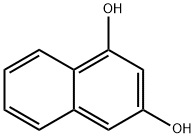
1,3-Dihydroxynaphthalene (1,3-DHN) is a multifunctional chemical reagent. Similar to resorcinol, it can be phosphorylated at room temperature using phosphotriamide, though its rate of diphosphorylation is lower. In addition, the 1,3-DHN molecule exhibits fluorescent properties, with absorption spectra peaking at 290 nm and 330 nm, while the emission spectrum shows a peak at 380 nm and a shoulder peak at 425 nm. Non-ionic surfactants significantly enhance the fluorescence intensity of 1,3-DHN, whereas the addition of cationic or anionic additives diminishes its fluorescence intensity.
orange-pink to brown crystalline powder. 1,3-Naphthalenediol [132-86-5], naphthoresorcinol, mp 124℃, is synthesized by hydrolysis of 1,3-naphthalenediamine with sulfuric acid; by heating 1-amino-3-hydroxy-naphthalene-4-sulfonic acid with acid; or by cyclization of ethyl phenylacetoacetate. It is used as an analytical reagent for sugars and glucuronic acid in urine. It is oxidized in alkaline solution to 2-hydroxy-1,4-naphthoquinone and reacts with ammonia at 140℃ to give 3-amino-1- naphthol and 1,3-naphthalenediamine.
Reagent for sugars, oils, and for glucuronic acid in urine: Forsyth, Nature 161, 239 (1948); Heyns, Kelch, Z. Anal. Chem. 139, 339 (1953).
1,3-Naphthalenediol is a derivative of naphthalene (N345600) and may have antibacterial activity against oral bacteria.Dyes and metabolites.