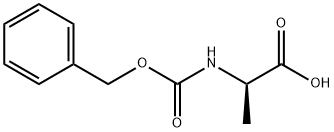
At 10°C, 10 mmol of D-alanine was dissolved in 4.0 ml of 8% sodium hydroxide (NaOH) aqueous solution to obtain a solution. While stirring, 14 mmol (1.8 ml) of benzyl chloroformate was added dropwise to the solution at a rate of 1 drop/9 seconds. The pH was maintained at 8 by adding 8% sodium hydroxide (NaOH) aqueous solution. After the addition was complete, the solution was placed at 28°C and stirred for 15 hours. Thin-layer chromatography was performed to confirm complete reaction. The solution was then washed three times with 5 ml of diethyl ether each time, and the ether was discarded, yielding the aqueous phase. The pH of the aqueous phase was adjusted to 3 with 30% hydrochloric acid, resulting in a milky white solid. The liquid after the appearance of a milky white solid was extracted three times with 5 ml of ethyl acetate each time. The extracts were combined and washed twice with 5 ml of distilled water each time and once with 5 ml of saturated brine each time. The liquid was then dried with anhydrous magnesium sulfate for 12 hours, filtered, and the filtrate was concentrated under reduced pressure to obtain a pale yellow oil. The oil was purified by column chromatography using a mixed solvent of ethyl acetate and petroleum ether in a volume ratio of 1:3 as the mobile phase to obtain N-Cbz-D-Alanine, with a yield of 71.8% and a melting point Mp of 86-87℃.
N-Cbz-D-alanine is the Cbz-protected form of D-Alanine (A480995). D-Alanine is an amino acid that is commonly found in bacteria, such as Streptococcus faecalis. It is essential for the biosynthesis of peptidoglycan crosslinking sub-units that are used for bacterial cell walls. D-Alanine is also known to cause cytotoxic oxidative stress in brain tumour cells.