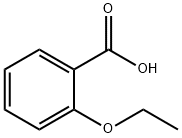
2-Ethoxybenzoic acid is used in thermally induced solvent-free reactions of triphenylbismuth with a series of thiols and carboxylic acids. It serves as an active component of dental cement. Further, it prevents the entry of root-canal pathogens into periapical regions.
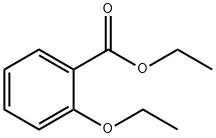
The general procedure for the synthesis of 2-ethoxybenzoic acid from ethyl o-ethoxybenzoate was as follows: potassium tert-butoxide (10 g, 890 mmol) was added batchwise to a stirred solution of ethyl 2-ethoxybenzoate (10 g, 240 mmol) in dimethyl sulfoxide (40 mL). The reaction mixture was heated to 70 °C in a water bath and maintained at this temperature for 2 h. The progress of the reaction was monitored by thin layer chromatography (TLC) using hexane-ethyl acetate (8:2) as a spreading agent. Upon completion of the reaction, the reaction mixture was cooled to 10 °C and poured into ice water. Subsequently, the reaction mixture was acidified with 5% dilute hydrochloric acid. The precipitated solid was filtered and washed thoroughly with distilled water. The crude product was recrystallized in hexane (50 mL) to give a final off-white solid 2-ethoxybenzoic acid (7.6 g, 80% yield).
[1] Patent: US2006/167107, 2006, A1. Location in patent: Page/Page column 4
[2] Justus Liebigs Annalen der Chemie, 1922, vol. 429, p. 169
[3] Journal of the Chemical Society, Chemical Communications, 1992, # 11, p. 823 - 824