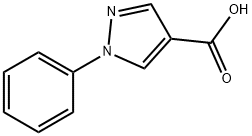
Steps: Sodium hydroxide was dissolved in a 100 mL three-neck reaction flask containing 20 mL of water under nitrogen protection and magnetic stirring. Subsequently, 1-phenyl-1H-pyrazole-4-carbaldehyde was added in one go. Persistent insoluble products were observed even at temperatures of 45-50 °C. Hydrogen peroxide was added to the suspension in six portions over a period of 50 min. After the reaction lasted for 5 h at 50 °C, monitoring by TLC showed that most of the raw material remained. Next, 10 mL of 1N NaOH solution (containing 0.4 g NaOH) and 5 g aqueous hydrogen peroxide were added. After continued stirring at 50 °C for 1 h, the insoluble product completely disappeared and TLC monitoring confirmed that the starting material had been completely consumed (color developer: dinitrophenylhydrazine). The reaction mixture was cooled to room temperature and poured into 150 mL of ice/2N HCl mixture (2:1 volume ratio). After stirring for 30 min, the white precipitate formed was filtered through a Brinell's funnel and washed three times with water. The precipitate was dissolved in 250 mL of ethyl acetate, dried over anhydrous magnesium sulfate, filtered and evaporated to dryness to give 2.25 g of white solid product (yield: 96%).
[1] Inflammopharmacology, 2018, vol. 26, # 1, p. 217 - 226
[2] Patent: US2006/34786, 2006, A1. Location in patent: Page/Page column 62-63
[3] Chemical and Pharmaceutical Bulletin, 1980, vol. 28, # 4, p. 1265 - 1269
[4] Patent: US2009/239810, 2009, A1. Location in patent: Page/Page column 72