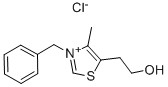
3-Benzyl-5-(2-hydroxyethyl)-4-methylthiazolium chloride, aliphatic aldehydes undergo the acyloin condensation in the presence of this catalyst and mild base. It acts as a catalyst for the addition of aliphatic and heterocyclic aldehydes to α,β-unsaturated ketones, nitriles and esters.
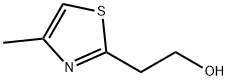
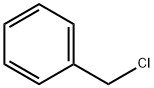
Methyl hydroxyethyl thiazole (2.86 kg), acetonitrile (8.58 kg) and benzyl chloride (2.54 kg) were mixed in a 20 L reactor fitted with a stirrer and heated to reflux for 6.5 hours. After completion of the reaction, the reaction solution was cooled to room temperature and a solid was precipitated. Acetonitrile (3 kg) was added to the reaction solution, stirred and filtered. The resulting solid was washed with acetonitrile (2.0 kg) and then dried under reduced pressure to finally obtain 3-benzyl-5-(2-hydroxyethyl)-4-methylthiazole chloride (2.36 kg, 44% yield).
Purify the chloride by recrystallisation from EtOH or H2O. If placed in a bath at 125o and heated at 2o/minute, the melting point is 140.5-141.4o. [Livermore & Sealock J Biol Chem 167 699 1947, Maier & Metzler J Am Chem Soc 79 4386 1957, Beilstein 27 III/IV 1758.]
[1] Patent: JP5814080, 2015, B2. Location in patent: Paragraph 0062