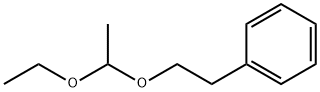
The traditional synthesis of 1-(2-(((1-ETHYLOXY)ETHYL)OXY)ETHYL)BENZENE mainly involves five routes: the addition of alcohols to vinyl alkyl ethers, the triacetaldehyde synthesis, the α-chloroethyl ether method, the alcohol exchange method, and the alcohol-aldehyde reaction method. The reaction of vinyl alkyl ethers with alcohols to produce mixed alcohol acetals is the most important and widely recognized synthetic method, but it suffers from drawbacks such as the high toxicity of vinyl ethyl ethers and complex preparation. The triacetaldehyde method is simple to operate, uses readily available raw materials, and completes the reaction in one step, but it produces many byproducts and requires complicated post-processing. The alcohol-aldehyde reaction method also produces many reactive products and has cumbersome post-processing. The alcohol exchange method is simple to operate, uses readily available raw materials, completes the reaction in one step, and produces few byproducts. Therefore, 1-(2-(((1-ETHYLOXY)ETHYL)OXY)ETHYL)BENZENE is prepared from phenethyl alcohol and acetaldehyde diethyl acetal via acetal exchange reaction in the presence of an acidic catalyst. However, under the action of conventional inorganic acids, this method has drawbacks such as long reaction time, many byproducts, low yield, dark color, low catalytic activity, corrosion of equipment, and difficult-to-treat waste acid, posing a significant environmental hazard.


![Benzene, [2-(1-ethoxyethoxy)ethyl]- pictures](/ProductImageEN/2022-04/Small/47bea5f8-8309-4045-8fc9-e8742afe50c4.jpg)