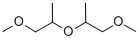
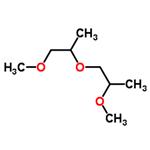
Using dipropylene glycol and iodomethane as raw materials, a methylation reaction occurs under the action of an alkaline catalyst to produce dipropylene glycol dimethyl ether. The dipropylene glycol dimethyl ether system produced in the previous methylation reaction is subjected to solvent azeotropic dehydration, followed by cooling to precipitate salt. The salt is removed by filtration to obtain the filtrate. The third step is product purification: the filtrate obtained in the second step of azeotropic dehydration is separated by distillation, the solvent is recovered under normal pressure, and then purified target product dipropylene glycol dimethyl ether is obtained by vacuum distillation.
Dipropylene Glycol Dimethyl Ether is unique among propylene oxide-based solvents in that it is aprotic (no hydroxyl functionality). As a result, it is relatively inert and can be used in protonsensitive systems such as water-based polyurethane coatings. Dipropylene Glycol Dimethyl Ether can also be used as an azeotroping solvent for esterification reactions. And with its excellent stability, solvency, and coupling performance, Dipropylene Glycol Dimethyl Ether provides excellent compatibility with a wide range of agricultural formulations and cleaning products.
Dipropylene glycol diMethyl ether can be used as aprotic solvent for use on proton-sensitive systems such as water-based polyurethane coatings.
1-Methoxy-2-((1-methoxypropan-2-yl)oxy)propane is used in method for evaluating profile of ink compound and manufacturing organic light emitting device comprising same.
The ITSL for dipropylene glycol dimethyl ether (DPGDME) is 59 μg/m3 based on an 24 hr. averaging time.