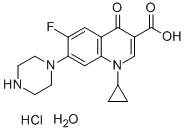
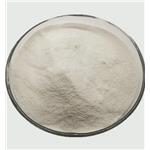
Pale yellow, crystalline, slightly hygroscopic powder.
Fluoroquinolone antibacterial.
Ciprofloxacin hydrochloride has been suggested as a treatment for a wide range of infections caused by susceptible organisms including infections of urinary, respiratory, and gastrointestinal tracts, gonorrhoea and septicaemia. Nalidixic acid analogue.
Ciprofloxacin hydrochloride hydrate is a broad-spectrum antibiotic that inhibits bacterial DNA gyrase and blocks DNA synthesis and replication, resulting in bacterial death. It has strong antibacterial activity against Escherichia coli, Klebsiella and other Enterobacteriaceae; the antibacterial activity against Pseudomonas aeruginosa, Staphylococcus aureus and Streptococcus pneumoniae is better than norfloxacin and pefloxacin.
ChEBI: The monohydrate form of ciprofloxacin monohydrochloride.
Ciloxan (Alcon); Cipro (Bayer); Proquin (Esprit).
Ciprofloxacin HCl is a fluoroquinolone antibiotic agent, which shows a broad spectrum of antibacterial activity against gram positive and gram negative bacteria.
Ciprofloxacin hydrochloride hydrate is prepared via continuous flow synthesis starting from simple building blocks through an eight-step sequence involving sequential filtrations and offline acidifications, as well as by offline pH adjustment, filtration, and crystallization from ciprofloxacin sodium salt produced through a rapid assembly of five building blocks[1].
Ciprofloxacin (hydrochloride monohydrate) is a fluoroquinolone antibiotic, exhibiting potent antibacterial activity. Ciprofloxacin (hydrochloride monohydrate) (CIP) shows potent activity against Y. pestis with MIC 90 of 0.03 μg/mL.
Ciprofloxacin (hydrochloride monohydrate) (1 mg/L) induces glutathione-S-transferase (GST) activity, in contrast with inhibited GST and Catalase (CAT) of larvae exposed to enrofloxacin. Ciprofloxacin (hydrochloride monohydrate) (≥10 μg/L) is ecotoxic for development, growth, detoxifying, and oxidative stress enzymes in anuran amphibian larvae. In a murine model of pneumonic plague, Ciprofloxacin (hydrochloride monohydrate) (30 mg/kg, i.p.) results in a drug exposure which is similar to the drug exposure observed in human following a 500 mg dose of oral Ciprofloxacin (hydrochloride monohydrate). Intraperitoneal Ciprofloxacin (hydrochloride monohydrate) reduces the lung bacterial load compare to controls treated with intraperitoneal PBS.
[1]Lin, H., Dai, C., Jamison, T. F., & Jensen, K. F. (2017). A Rapid Total Synthesis of Ciprofloxacin Hydrochloride in Continuous Flow. Angewandte Chemie International Edition, 56(30), 8870–8873.
https://doi.org/10.1002/anie.201703812