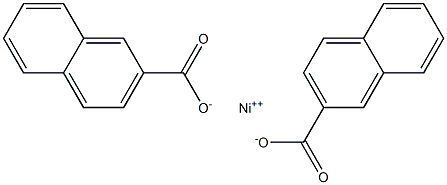
Step 1: Saponification Reaction. Add the naphthenic acid required for the reaction and 12% sodium hydroxide at a molar ratio of 1:0.98-0.995 to the reactor. Start the stirrer and heat to 90-97℃. The reaction time is 2-3 hours. In the experiment, the separation of the oil phase and soap phase after saponification is achieved by natural sedimentation. After saponification, it needs to stand for about 30 minutes. If the effect is not obvious, salt can be added for salting out before separation. The reaction is as follows:

Step 2: Metathesis Reaction.
The reaction molar ratio of sodium naphthenate (NiCl·6H₂O) is 2:0.98. The NiCl·6H₂O aqueous solution is added dropwise to the saponification solution while the stirrer is running and the temperature is maintained at 90–97°C. The addition time is 1.0–1.5 h, and the reaction continues for 2 h after the addition is complete. Step 3: Post-treatment process. Nickel naphthenate was prepared in step 2, but it contains a large amount of inorganic salts (mainly NaCl, etc.), which need to be removed by washing with water. However, naphthenates have a high viscosity; to facilitate water washing and separation, a certain temperature is maintained, and a certain amount of solvent (toluene or xylene) needs to be added for dilution. Washing is performed 2–3 times. After the water layer is drained, dehydration and solvent removal are carried out. Because the stability of various naphthenates differs, the temperature and endpoint of dehydration and drying are controlled, generally between 80–120°C.