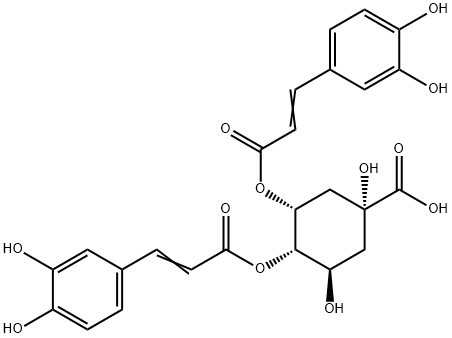
4,5-Dicaffeoylquinic acid (4,5-DCQA) is a polyphenol originally isolated from G. fagetorum and G. pseudomollugo that has diverse biological activities, including anti-HIV replication, antioxidative, anti-inflammatory, and anti-melanogenic properties. It inhibits HIV-1 integrase 3'' end processing, 3’ end joining, and disintegration with IC50 values of 0.13, 0.24, and 0.3 μg/ml, respectively. It also inhibits HIV-1 replication in MT-2 T lymphoblastoid cells with an EC50 value of 2 μg/ml. 4,5-DCQA scavenges 2,2-diphenyl-1-picrylhydrazyl (DPPH; Item No. 14805) radicals in a cell-free assay (IC50 = 19.8 μM) and inhibits superoxide production in human neutrophils activated by N-formyl-Met-Leu-Phe (fMLF; ) and cytochalasin B (; IC50 = 1.49 μM). It decreases prostaglandin E2 (PGE2; ) production in LPS-stimulated U937 cells when used at concentrations of 5 and 10 μg/ml but increases it when used at 200 μg/ml and increases production of TNF-α at concentrations ranging from 5 to 200 μg/ml. It inhibits the synthesis of MCP3 in U937 cells. 4,5-DCQA (25 μM) inhibits melanogenesis by 84% and decreases the levels of proteins involved in melanin biosynthesis, including tyrosinase, TRP-1, DCT, and MITF in B16F1 murine melanocytes.
[1] A. K. BOGAEVSKII M. I B L I Dranik. The hydroxycinnamic acids of Galium fagetorum and G. pseudomollugo[J]. Chemistry of Natural Compounds, 1970, 6 6: 761-762. DOI:
10.1007/bf00565353[2] YU-LI CHEN. Ilex kaushue and Its Bioactive Component 3,5-Dicaffeoylquinic Acid Protected Mice from Lipopolysaccharide-Induced Acute Lung Injury[J]. Scientific Reports, 2016, 6 1. DOI:
10.1038/srep34243[3] M. D. SANTOS. Effects of Caffeoylquinic Acid Derivatives and C-Flavonoid from Lychnophora ericoides on in vitro Inflammatory Mediator Production[J]. Natural Product Communications, 2010, 35 1. DOI:
10.1177/1934578x1000500512[4] JI HOON HA Soo N P. Mechanism underlying inhibitory effect of six dicaffeoylquinic acid isomers on melanogenesis and the computational molecular modeling studies[J]. Bioorganic & Medicinal Chemistry, 2018, 26 14: Pages 4201-4208. DOI:
10.1016/j.bmc.2018.07.014