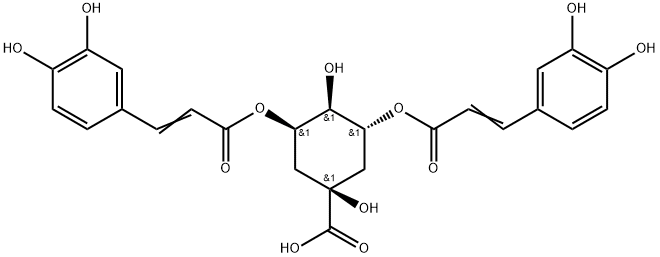
3,5-Dicaffeoylquinic acid (3,5-DCQA) is a natural phenolic compound that has been found in L. japonica, I. kaushue, and other plants. It has antioxidant, anti-inflammatory, and antiviral biological activities. 3,5-DCQA scavenges 2,2-diphenyl-1-picrylhydrazyl (DPPH; ) radicals in a cell-free assay (IC50 = 71.8 μM) and inhibits superoxide production in human neutrophils activated by N-formyl-Met-Leu-Phe (fMLF) and cytochalasin B (IC50 = 1.92 μM). It inhibits HIV-1 integrase 3''-end processing, strand transfer, and disintegration in a cell-free assay (IC50s = 0.33, 0.34, and 0.66 μg/ml, respectively) and inhibits HIV-1-induced cytotoxicity in MT-2 cells (ED50 = 1 μg/ml). In vivo, 3,5-DCQA (25 mg/kg) protects mice from acute lung injury induced by LPS and decreases neutrophil count in bronchoalveolar lavage fluid (BALF).
Off-white crystalline powder, soluble in organic solvents such as methanol, ethanol, and DMSO, derived from honeysuckle, honeysuckle, eucommia, and chrysanthemum.
Isochlorogenic Acid A is a phenolic compound shown to provide protection against oxidative stress cells. DNA protective agent.
ChEBI: 3,5-di-O-caffeoyl quinic acid is a carboxylic ester that is the diester obtained by the condensation of the hydroxy groups at positions 3 and 5 of (-)-quinic acid with the carboxy group of trans-caffeic acid. Isolated from Brazilian propolis and Suaeda glauca, it exhibits hepatoprotective and cytotoxic activities. It has a role as a metabolite, a hepatoprotective agent and an antineoplastic agent. It is a cyclitol carboxylic acid and a carboxylic ester. It is functionally related to a (-)-quinic acid and a trans-caffeic acid.
Isochlorogenic acid A (5and 10 mg/kg, p.o., once a day for 3 weeks) ameliorates cognitive impairment induced by TMT in ICR male mice[5].
| Animal Model: | TMT-induced ICR male mice[5] |
| Dosage: | 5and 10 mg/kg |
| Administration: | p.o., once a day for 3 weeks |
| Result: | Improved spatial memory and learning ability of mice in MWM test.
Reduced the TMT-induced increased AChE activity.
Reduced the MDA content compared to the TMT group. |
[1] LI-YAN PENG. Constituents from Lonicera japonica[J]. Fitoterapia, 2000, 71 6: Pages 713-715. DOI:
10.1016/s0367-326x(00)00212-4[2] KRISS DAYANA PANTOJA PULIDO José H I M Ana Julia Colmenares Dulcey. New caffeic acid derivative from Tithonia diversifolia (Hemsl.) A. Gray butanolic extract and its antioxidant activity[J]. Food and Chemical Toxicology, 2017, 109: Pages 1079-1085. DOI:
10.1016/j.fct.2017.03.059[3] W E ROBINSON. Inhibitors of HIV-1 replication [corrected; erratum to be published] that inhibit HIV integrase.[J]. Proceedings of the National Academy of Sciences of the United States of America, 1996, 93 13: 6326-6331. DOI:
10.1073/pnas.93.13.6326