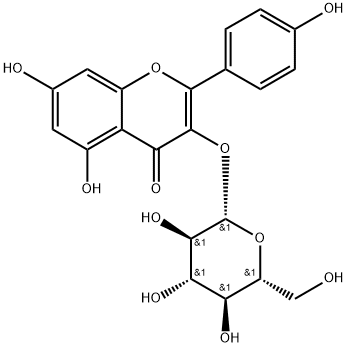
method for the enzymatic synthesis of ASTRAGALIN comprises the following steps:
1) Cloning, expressing, and purifying the key enzymes required for the synthesis of ASTRAGALIN, including glycogen phosphorylase GP, glucose pyrophosphorylase GalU, flavanone-3-hydroxylase F3H, flavanone synthase FLS1, and flavonoid 3-O-glucosyltransferase UGT78K2;
2) Muscle glycogen (Gn) synthesizes glucose-1-phosphate (G-1-P) under the action of GP;
3) G-1-P synthesizes uridine diphosphate glucose (UDPG) under the action of GalU;
4) Naringin (NRN) synthesizes dihydrokaempferol (DHK) under the action of F3H;
5) DHK synthesizes kaempferol (KMF) under the action of FLS1;
6) KMF and UDPG synthesize ASTRAGALIN under the action of UGT78K2. This invention involves fewer steps, milder operating conditions, fewer byproducts, higher yield, no pollution, and significantly reduced production costs.
Astragalin belongs to the class of organic compounds known as flavonoid-3-o-glycosides. These are phenolic compounds containing a flavonoid moiety which is O-glycosidically linked to carbohydrate moiety at the C3-position. Astragalin exists as a solid, slightly soluble (in water), and a very weakly acidic compound (based on its pKa). Within the cell, astragalin is primarily located in the cytoplasm. Astragalin can be converted into astragalin heptaacetate and 2''-acetylastragalin. Outside of the human body, astragalin can be found in a number of food items such as tamarind, american cranberry, chickpea, and bilberry. This makes astragalin a potential biomarker for the consumption of these food products.