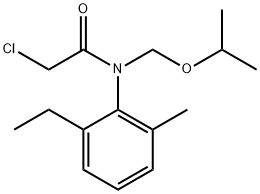
Propisochlor is an herbicide that is absorbed through the shoots of germinating plants.
Propisochlor is commercially synthesised through a three-stage process. First, 6-ethyl-o-toluidine reacts with methoxyacetone in the presence of p-toluenesulfonic acid in toluene at 88 °C for 10 hours to form an imine intermediate. Second, this intermediate undergoes hydrogenation under high pressure at 50 DegC in an autoclave to reduce the imine. Finally, the resulting amine is reacted with chloroacetyl chloride in the presence of sodium carbonate in water and toluene to form the final herbicidal compound.
Inhibits protein synthesis and so blocks cell division, selective, absorbed by shoots of germinating plants. Inhibition of very long chain fatty acids (VLCFA, inhibition of cell division)