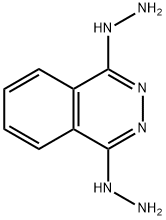
Dihydralazine (trade name: Ophthazin; CAS No. 484-23-1), also known as 1,4-dihydrazinylphthalazine, occurs as orange, needle-like crystals and decomposes at approximately 180 °C. Its sulfate salt (CAS No. 2740-03-6), the form commonly used in clinical practice, is obtained as white, needle-like crystals with a decomposition point of 233 °C. It is slightly soluble in boiling water and sparingly soluble in water or ethanol.
Ophthazin is an antihypertensive agent of the hydrazine class used during pregnancies in dialysis patients with familial mediterranean fever and cystinosis under hemodialysis.
Dihydralazine is prepared from dichlorophthalazine via sequential substitution and hydrazination reactions.
ChEBI: Dihydralazine is a member of phthalazines.
115 parts of hydrazine hydrate in 80 parts 50% acetic acid were added to 128
parts of phthalic acid dinitrile in 250 parts dioxane. The mixture was heated at
the temperature 95°C for 3 hours with stirring. After 20 minutes the
crystallization and discharging of NH3 began. The orange needles were filtered
off after cooling. The product was washed with dioxane and ethanol and
recrystallized from 3000 parts of water to yield 110 parts colorless needles of
1,4-dihydrazino-phthalazine; MP: 191°-193°C (decomp.). The crystals were
getting a little orange color by standing because of a reaction with an air
oxygen.
Poison by intravenous route. Anexperimental teratogen. When heated to decomposition itemits toxic fumes of NOx.