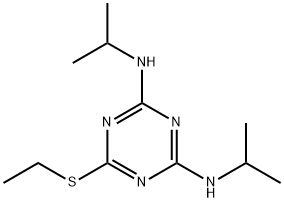
Pure product is white solid. Melting point 104~106℃, relative density 1.12, vapor pressure 9.71×10⁻⁵Pa, soluble in acetone, ethanol, dioxane and other organic solvents, solubility 16mg/L in water at 20℃, stable at room temperature and pressure, neutral, slightly acidic, slightly alkaline conditions, but hydrolyzed into hydroxyl derivatives with no herbicidal activity under the condition of strong acid or strong base.
Dipropetryn PESTANAL, analytical standard
Preemergence herbicide used to control weeds in cotton and melon crops.
ChEBI: Dipropetryn is a member of 1,3,5-triazines.
Dipropetryn was produced commercially through the synthesis of a substituted s triazine herbicide, specifically 2 (tert butylamino) 4 (isopropylamino) 6 methylthio s triazine. Industrial manufacture involved condensation of cyanuric chloride (2,4,6 trichloro s triazine) with isopropylamine and tert butylamine under controlled conditions, followed by substitution with a methylthio group. The process required careful regulation of temperature and pH to ensure selective substitution at each triazine ring position.
Photosynthetic electron transport inhibitor at the photosystem II receptor site. Selective and systemic.
Soil. Degradation of dipropetryn includes dealkylation of the side chain(s), ring opening and the evolution of carbon dioxide (Hartley and Kidd, 1987). The reported half-life in soil is approximately 100 days (Worthing and Hance, 1991).