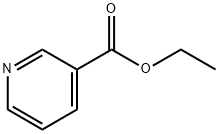
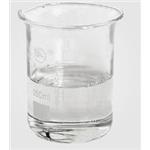
Nicotinic acid, anhydrous ethanol, and a solid acid catalyst for esterification are added to toluene. The mixture is stirred at 50–65°C for 3–6 hours, then heated and refluxed to separate water. Once no water is discharged, the reaction is complete. The mixture is cooled to room temperature, filtered, and the solid acid catalyst for esterification is recovered. Toluene is recovered from the filtrate under reduced pressure. The resulting light yellow transparent liquid is ethyl nicotinate. The molar ratio of nicotinic acid to anhydrous ethanol is 1:1–1:2, the weight ratio of nicotinic acid to toluene is 1:0.3–1:8, and the amount of solid acid catalyst added is 0.01–0.1 times the weight of nicotinic acid. The solid acid catalyst for esterification is HND230 solid catalyst.
Ethyl nicotinate is a chemical attractant used to prevent and control plant pests. Ethyl nicotinate was found to be a potent attractant forThrips obscuratus in peaches and apricots. It is more attractive than ripe fruit and catches peak at harvest. Long season trapping demonstrated the efficiency of chemical traps compared to unbaited traps. The attractiveness of the chemical was maintained for at least 2 weeks when 50 μl of the chemical was placed in an open 2 ml vial cap. Various pyralids, geometrids (Lepidoptera), and chironomids (Diptera) were also attracted in low numbers to ethyl nicotinate[1].
clear colourless to yellow liquid
Ethyl nicotinate is used for skin-conditioning cosmetics. It is principally used in medicine as a local vasodilator at a concentration of 1 to 2 % in creams, ointments and pomades. It is utilized for the treatment sprains, wrenches, muscular pains and tendonitis.
Ethyl nicotinate is a nicotinic acid derivative used for skin-conditioning cosmetics.
ChEBI: Ethyl nicotinate is a member of pyridines and an aromatic carboxylic acid.
Soluble in water (50 mg/ml at 20° C).
[1] D R PENMAN. Ethyl nicotinate: A chemical attractant forThrips obscuratus (Thysanoptera: Thripidae) in stonefruit in New Zealand.[J]. Journal of Chemical Ecology, 1982. DOI:10.1007/BF00987763.