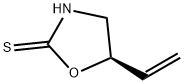
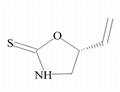
Epigoitrin (88-176 mg/kg/d; oral administration; once daily; for 7 consecutive days) reduces the susceptibility of mice to influenza virus in a restraint - stress - induced H1N1 virus - infected mouse model, manifested as reduced mortality, attenuated inflammation, and decreased viral replication in the lungs[1].
Epigoitrin (50-100 mg/kg; added to the feed; for 12 weeks) reduces fat deposition, improves glucose tolerance and insulin sensitivity, and increases energy expenditure in a high-fat diet-induced obese mouse model[3].
| Animal Model: | Five-week-old male C57BL/6J mice were fed a high-fat diet to establish an obesity model[3].
|
| Dosage: | 50 mg/kg, 100 mg/kg |
| Administration: | Added to the feed, continuously administered for 12 weeks |
| Result: | Reduced fat deposition in HFD mice.
Reduced adipocyte hypertrophy.
Alleviated hepatic steatosis, as shown by reduced liver lipid droplets and lower liver and serum TG and TC levels.
Had no effect on food intake. |
| Animal Model: | Specific-pathogen-free male Kunming mice (4 weeks of age; 12-15 g) loaded with restraint stress[1] |
| Dosage: | 88 mg/kg, 176 mg/kg |
| Administration: | Oral administration, once daily, for 7 days |
| Result: | Increased the survival rate, prolonged the mean day to death, and reduced the morbidity sign.
Significantly decreased the virus titer in the lungs, reduced the infiltration of inflammatory cells in the lungs, and lowered the levels of TNF-α and IL-1β in bronchoalveolar lavage fluid.
Increased the protein expressions of MAVS, IFN-β, and IFITM3 in the lung tissue, and decreased the protein level of MFN2 and virus nucleoprotein (NP) in stressed mice.
|