Description
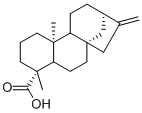
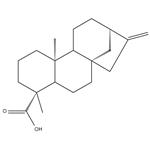
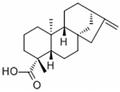
Kaurenoic acid is a diterpene that has been found in
C. langsdorffii and has diverse biological activities, including anticancer, antibacterial, antioxidant, and anti-inflammatory properties. It is cytotoxic to 22Rv1 and LNCaP prostate, HT-29, HCT116, SW480, and SW620 colon, and MCF-7 breast cancer cells with IC
50 values ranging from 15.03 to 48.87 μg/ml. Kaurenoic acid is active against
S. epidermidis,
S. capitis,
E. faecalis, and
S. haemolyticus in vitro (MICs = 6.25-12.5 μg/ml). Kaurenoic acid (50 and 100 mg/kg) reduces colonic myeloperoxidase (MPO) activity and malondialdehyde (MDA) levels in a rat model of acetic acid-induced colitis, as well as colonic tissue damage, leukocytic infiltration, and submucosal edema when administered at a dose of 100 mg/kg.
Chemical Properties
White crystalline powder, soluble in organic solvents such as methanol, ethanol, and DMSO, derived from plants such as Acanthopanax Cortex (1% content) and Bletilla striata leaves.
Uses
ent-Kaurenoic Acid can be used in biological study. Kinetic profile of guaco syrup metabolites like coumarin, 7-hydroxycoumarin, o-coumaric acid, kaurenoic acid can be performed for identification of alternative route of coumarin metabolism in human plasma.
Definition
ChEBI: An ent-kaurane diterpenoid that is ent-kauran-19-oic acid in which a double bond is present at position 16(17); exhibits anticancer and anti-HIV 1 activity.
in vivo
Kaurenoic acid (1-10 mg/kg, i.g., single dose) reduces peritonitis and pain induced by lipopolysaccharides (HY-D1056) in mice[2].
Kaurenoic acid (as a diterpene compound) is the main active ingredient in the root bark extract of A. senegalensis that exhibits anticonvulsant effects in mice[3].
| Animal Model: | Mice induced by LPS[2] |
| Dosage: | 1, 3, 10 mg/kg; single dose |
| Administration: | i.g. |
| Result: | Inhibited LPS-induced mechanical and thermal hyperalgesia, suppressed MPO activity, regulated the redox state of mouse paws, inhibited the production of pro-inflammatory/pain cytokines (such as TNF-α, IL-1β, and IL-33), and enhanced the production of anti-inflammatory/analgesic cytokine IL-10. |
References
[1] L.A.F. PAIVA . Anti-inflammatory effect of kaurenoic acid, a diterpene from Copaifera langsdorffii on acetic acid-induced colitis in rats[J]. Vascular pharmacology, 2002, 39 6: Pages 303-307. DOI:
10.1016/s1537-1891(03)00028-4[2] GENEIVE E. HENRY . Kaurene diterpenes from Laetia thamnia inhibit the growth of human cancer cells in vitro[J]. Cancer letters, 2006, 244 2: Pages 190-194. DOI:
10.1016/j.canlet.2005.12.022[3] A. C. F. SOARES. Variability of the antibacterial potential among analogue diterpenes against Gram-positive bacteria: considerations on the structure–activity relationship[J]. Canadian Journal of Chemistry, 2019, 62 1. DOI:
10.1139/cjc-2018-0369