Chemical Properties
Soluble in acidic solution, insoluble in petroleum ether, chloroform and other solvents. Derived from the roots of Thalictrum polygamun Muhl.
Uses
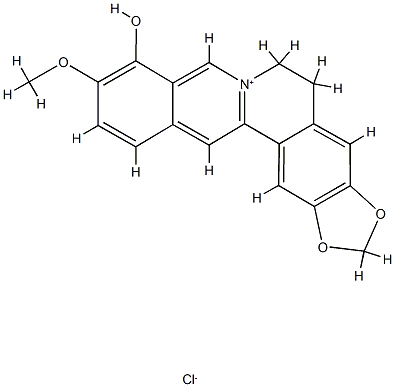
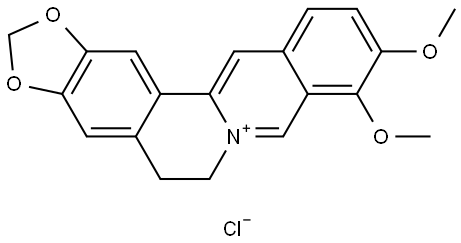
Berberrubine Chloride is a novel alkaloid with novel nitric-oxide donating activity. Antitumor and an antimicrobial agent.
Definition
ChEBI: Berberrubine is an alkaloid.
Synthesis
A literature review of various methods to prepare berberrubine:
1. Vacuum pyrolysis; 2. Microwave irradiation; 3. Pyridine hydrochloride fusion; 4. Urea method; 5. Aluminum trichloride method; 6. Esterification-hydrolysis method. Steps for method 2 (microwave) are described in detail.
in vivo
Berberrubine (oral administration; 10-20 mg/kg; 7 days) has a beneficial effect in a mouse colitis model[3].
| Animal Model: | DSS (HY-116282) treated male Balb/c mice aged 6 weeks old[3] |
| Dosage: | 10 and 20 mg/kg |
| Administration: | Oral administration (p.o.); 7 days |
| Result: | Significantly reduced the disease activity index (DAI) with prolonged colon length and increased bodyweight at dose of 20 mg/kg.
Significantly ameliorated the DSS-induced colonic pathological alternations and decreased histological scores.
Markedly attenuated colonic inflammation by alleviating inflammatory cell infiltration and inhibiting myeloperoxidase (MPO) and cytokines (TNF-α, IFN-γ, IL-1β, IL-6, IL-4 and IL-10) productions in DSS mice.
Substantially upregulated the expression of tight junction proteins (zonula occludens-1, zonula occludens-2, claudin-1, occludin) and mRNA expression of mucins (mucin-1 and mucin-2), and decreased the Bax/Bcl-2 ratio. |