Chemical Properties
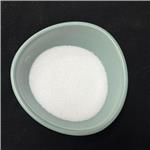
white crystalline powder
Uses
It is a reagent for preparation of aryl trifluoromethyl sulfides, by heating with the diaryl disulfide.
Flammability and Explosibility
Non flammable
Synthesis
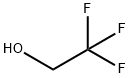
Example 14: Synthesis of potassium trifluoroacetate (CF3-COOK(5)); In a 500 mL glass flask, 20 mL of water, 73 mL of acetonitrile (MeCN), 1.33 g of potassium bromide (KBr), 0.46 g of TEMPO, and 10 g of 2,2,2-trifluoroethanol were sequentially added. The flask was equipped with a dropping funnel and a stirrer. An aqueous solution of sodium hypochlorite (NaOCl) (15 wt%, 175 mL) with pH adjusted to 8-9 was added in three batches through the dropping funnel under stirring at room temperature and the addition process took two days. Upon completion of the reaction, concentrated sulfuric acid and water were added to the reaction mixture to adjust the pH to 1-2. The reaction mixture was extracted three times with ether. The ether phases were combined and dried with magnesium sulfate, followed by distillation at atmospheric pressure to remove the ether. To the distillate was added 60 mL of methanol and 7 g of potassium methanolate and stirred for 1 h at room temperature. The solvent was evaporated after filtration to give potassium trifluoroacetate (13.13 g, 86% yield) as a colorless solid.19F NMR (D2O): -76.82 (s, 3F).
Purification Methods
To purify it, dissolve the salt in trifluoroacetic acid with ca 2% of trifluoroacetic anhydride, filter it and evaporate it carefully to dryness (avoid over heating), and finally dry it in a vacuum at 100o. It can be recrystallised from trifluoroacetic acid (solubility in the acid is ca 50.1%). [Simons & Lorentzen J Am Chem Soc 74 4746 1952, Hara & Cady J Am Chem Soc 76 4285 1954, Watt & Muga J Inorg Nucl Chem 9 166 1959, Beilstein 2 IV 458.]
References
[1] Patent: WO2011/50131, 2011, A2. Location in patent: Page/Page column 40
[2] Journal of Fluorine Chemistry, 2012, vol. 141, p. 35 - 40