Uses
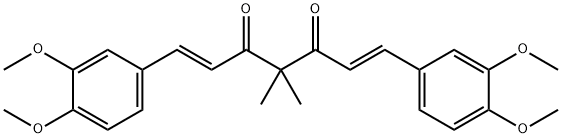
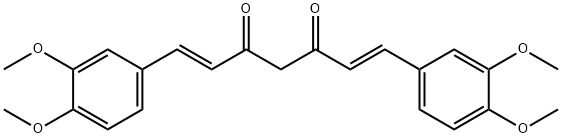
Tetramethylcurcumin (FLLL31), derived from curcumin, specifically suppresses the phosphorylation of STAT3 by binding selectively to Janus kinase 2 and the STAT3 Src homology-2 domain. Tetramethylcurcumin exhibits anti-inflammatory and anti-cancer effects[1][2].
Biological Activity
Tetramethylcurcumin (FLLL31) is derived from curcumin and specifically inhibits phosphorylation of STAT3 by selectively binding to Janus kinase 2 and the STAT3 Src homology 2 domain. Tetramethylcurcumin has anti-inflammatory and anticancer effects.
in vitro
Tetramethylcurcumin (FLLL31; 2.5 and 5 μM; for 24 hours) downregulas STAT3 phosphorylation and DNA-binding activity in MDA-MB-231 breast and PANC-1 pancreatic cancer cells.
Tetramethylcurcumin inhibits cell viability , cell invasion. Tetramethylcurcumin is an effective inhibitor of STAT3 phosphorylation, DNA-binding activity, and transactivation in vitro, leading to the impediment of multiple oncogenic processes and the induction of apoptosis in pancreatic and breast cancer cell lines.
References
[1] Lin L, et al. Novel STAT3 phosphorylation inhibitors exhibit potent growth-suppressive activity in pancreatic and breast cancer cells. Cancer Res.2010 Mar 15;70(6):2445-54. DOI:
10.1158/0008-5472.CAN-09-2468[2] Yuan S, et al. FLLL31, a derivative of curcumin, attenuates airway inflammation in a multi-allergen challenged mouse model. Int Immunopharmacol.2014 Jul;21(1):128-36. DOI:
10.1016/j.intimp.2014.04.020