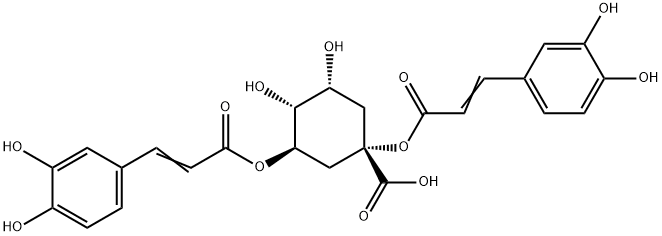
Description
1,5-Dicaffeoylquinic acid (1,5-DCQA) has been found in
A. montana and is an HIV-1 integrase inhibitor and free radical scavenger. 1,5-DCQA inhibits HIV-1 integrase 3'' end processing, end joining, and disintegration with IC
50 values of 0.35, 0.56, and 0.84 μg/ml, respectively. It also inhibits HIV-1 replication in MT-2 T lymphoblastoid cells with an ED
50value of 2 μg/ml. 1,5-DCQA (0.25-1 μM) reduces the level of free radicals released from human polymorphonuclear (PMN) cells stimulated by N-formyl-Met-Leu-Phe (fMLP; ) in a dose-dependent manner. It also dose-dependently increases cell survival and glutathione (GSH) levels and decreases reactive oxygen species (ROS) production and lactate dehydrogenase (LDH) release in an oxygen-glucose deprivation/reperfusion assay in rat cerebral astrocytes when used at concentrations ranging from 5 to 100 μM.
Chemical Properties
White crystalline powder, soluble in organic solvents such as methanol, ethanol, DMSO, etc., derived from artichoke leaves, artichoke, forest senecio herb, and honeysuckle.
Uses
1,5-Dicaffeoylquinic Acid acts as an anti-hyperlipidemic agent. In addition, acts as a neuroprotective agent against amyloid-β toxicity in the treatement of Alzheimer’s.
in vivo
1,3-Dicaffeoylquinic acid (32.0 mg/kg, p.o.) and 1-O-ABL are absorbed very quickly in Wistar rats. The maximum plasma concentrations for 1,3-Dicaffeoylquinic acid and 1-O-ABL are 44.5 ± 7.1 and 19.1 ± 6.9 ng/mL, respectively[1].
References
[1] J HEILMANN M W I Merfort. Radical scavenger activity of different 3’,4’-dihydroxyflavonols and 1,5-dicaffeoylquinic acid studied by inhibition of chemiluminescence.[J]. Planta medica, 1995, 61 5: 435-438. DOI:
10.1055/s-2006-958131[2] W E ROBINSON. Dicaffeoylquinic acid inhibitors of human immunodeficiency virus integrase: inhibition of the core catalytic domain of human immunodeficiency virus integrase.[J]. Molecular Pharmacology, 1996, 50 4: 846-855.
[3] XU CAO . 1, 5-Dicaffeoylquinic acid-mediated glutathione synthesis through activation of Nrf2 protects against OGD/reperfusion-induced oxidative stress in astrocytes[J]. Brain Research, 2010, 1347: Pages 142-148. DOI:
10.1016/j.brainres.2010.05.072