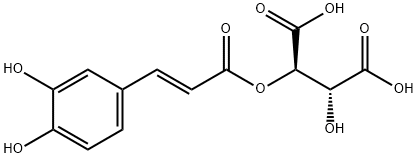
Description
Caftaric acid is a phenolic acid and a tartaric acid ester form of caffeic acid . It scavenges 2,2-diphenyl-1-picrylhydrazyl (DPPH; ) free radicals in a cell-free assay (EC
50 = 20.4 μM) and inhibits oxidation of LDL isolated from human plasma by 97.6% compared to vehicle control
in vitro when used at a concentration of 5 μM. Caftaric acid is the main phenolic compound in
V. vinifera white, pink, and black table grapes as well as various wines.
In vivo, caftaric acid content in dietary-administered red wine positively correlates with inhibition of protein carbonylation and decreased superoxide dismutase (SOD), glutathione peroxidase (Gpx), and catalase activities in mice.
Chemical Properties
Soluble in methanol, ethanol, DMSO and other organic solvents, derived from Echinacea purpurea.
Uses
Caftaric Acid is used in cancer therapy as an anticancer drug. Affecting the up regulation or down regulation of drug transporters or cytochrome p450 enzymes. Also provides antioxidant effects, found in wines.
Definition
ChEBI: Caftaric acid is a hydroxycinnamic acid.
References
[1] C. RICE-EVANS G P N Miller. Antioxidant properties of phenolic compounds[J]. Trends in Plant Science, 1997, 2 1: 152-159. DOI:
10.1016/s1360-1385(97)01018-2[2] D. VILLAO . Radical scavenging ability of polyphenolic compounds towards DPPH free radical[J]. Talanta, 2007, 71 1: Pages 230-235. DOI:
10.1016/j.talanta.2006.03.050[3] ANNE S. MEYER. Fruit Hydroxycinnamic Acids Inhibit Human Low-Density Lipoprotein Oxidation in Vitro[J]. Journal of Agricultural and Food Chemistry, 1998, 46 5: 1783-1787. DOI:
10.1021/jf9708960[4] CHRISTOPHE AUBERT Guillaume C. Chemical composition, bioactive compounds, and volatiles of six table grape varieties (Vitis vinifera L.)[J]. Food Chemistry, 2018, 240: Pages 524-533. DOI:
10.1016/j.foodchem.2017.07.152[5] E.F. GRIS . Phenolic profile and effect of regular consumption of Brazilian red wines on in vivo antioxidant activity[C]//31 1. 2013: Pages 31-40. DOI:
10.1016/j.jfca.2013.03.002