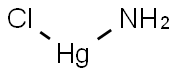
Chemical Properties
white powder
Uses
Anti-infective,
topical.
General Description
A white crystalline solid. Corrosive to the mucous membranes. Very toxic by inhalation and ingestion.
Reactivity Profile
MERCURY AMMONIUM CHLORIDE(10124-48-8) is incompatible with acetylene, ammonia, chlorine dioxide, azides, calcium (amalgam formation), sodium carbide, lithium, rubidium, copper .
Air & Water Reactions
Slightly water soluble. Decomposes in hot water.
Health Hazard
The general symptoms are those of mercury poisoning, developing rapidly after ingestion but more slowly after low repeated exposures. Contact with eyes causes irritation and ulceration. Skin contact may cause dermatitis. Ingestion causes pain, vomiting, metallic taste, ulceration of mouth and stomach, pallor, and rapid, weak pulse.
Fire Hazard
Special Hazards of Combustion Products: Smoke may contain toxic mercury compounds.
Preparation
Mercury (II) Amidochloride is prepared by reacting a mercury chloride solution with ammonia water.
Toxicity evaluation
Mercury (II) amidochloride has been classified as a Group 3 carcinogen by the International Agency for Research on Cancer (IARC) of the World Health Organisation (27 October 2017); the oral LD₅₀ in rats is 86 mg/kg, and the oral LC₅₀ in mice is 68 mg/kg.