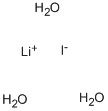
Method 1: The main components of the iodine solution are: w(I⁻) = 3%–5%, w(SO₄⁻) = 1.5%–3%, w(I) = 0.01%–0.15%, and the solution is strongly acidic. Since the iodine solution contains a small amount of elemental iodine, to improve iodine utilization, a small amount of sulfurous acid is first added as a reducing agent to reduce elemental iodine to iodide ions; then, a certain amount of anhydrous lithium carbonate is added, reacting to obtain lithium iodide and lithium sulfate solutions; after vacuum concentration, the resulting crystals are mixed crystals of lithium sulfate and lithium iodide; utilizing the characteristic that lithium iodide is easily soluble in acetone while lithium sulfate is insoluble in acetone, a certain amount of acetone is added to the mixed crystals (as an extractant) to separate and purify lithium iodide; finally, the extract is crystallized at low temperature to obtain a high-purity lithium iodide trihydrate product.
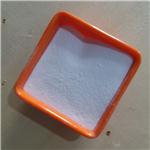
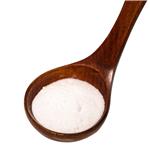
white crystal(s); extremely hygroscopic; granules of fused masses; becomes yellow due to liberation of I2 when exposed to atmospheric; used in air conditioning, as a catalyst in acetal formation; there are two other hydrates: LiI·2H2O, 17023-25-5, and LiI·H2O, 17023-24-4 [KIR81] [HAW93] [MER06]