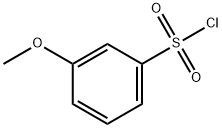
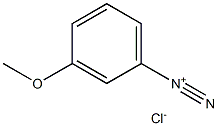
In another flask, a mixed solution of 450 mL of glacial acetic acid with 45 mL of water was saturated with sulfur dioxide gas at 25°C (about 180 g of sulfur dioxide was required). To this saturated solution, 20.4 g (0.12 mol) of copper(II) chloride was added and sulfur dioxide gas was passed again to saturation. A pre-prepared and cooled diazonium salt solution was added slowly and dropwise to the above stirred mixture in the range of 20-26 °C. There was a release of gas during the reaction, followed by a slow increase of the reaction temperature to 38°C. When the temperature started to drop naturally, external heating was applied to keep the mixture stirred at 50°C for 15 minutes. Upon completion of the reaction, the mixture was cooled to room temperature and quenched by pouring into 2 kg of ice water. The oily product in the reaction mixture was extracted with ether (2 x 1000 mL). The ether layers were combined and washed sequentially with 1N NaOH solution (2×1000 mL), 1N HCl solution (2×1000 mL), and saturated brine (1×1000 mL), then dried with anhydrous magnesium sulfate. The solvent was removed by distillation under reduced pressure to give 59.59 g of dark-colored oily crude product. The crude product was purified by silica gel column chromatography (silica gel dosage: 900 g) with dichloromethane/hexane (1:4, v/v) as eluent to give 43.52 g (43% yield) of 3-methoxybenzenesulfonyl chloride and 3.18 g of unidentified impurities. The products were analyzed by thin-layer chromatography (TLC) using silica gel plates with dichloromethane:hexane (1:1) as the unfolding agent, with an Rf value of 0.56 for the products and 0.41 for the impurities.