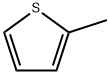
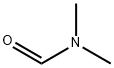
May be synthesized from thiophene (or its derivatives) and formamide
in the presence of POCl3; from N-(2-thenyl)formaldimines.
CLEAR YELLOW TO BROWN LIQUID
Reported found in French fried potato, roasted peanuts, tomato, wheat bread, raw chicken, cooked beef, pork
liver, cognac, malt whiskey, coffee, popcorn, krill, shrimp and okra
5-Methylthiophene-2-carboxaldehyde is used as a food additive. It is an analytical reagent. The reagent has been synthesized and characterized using IR, 1H NMR and Mass spectral data.
From thiophene (or its derivatives) and formamide in the presence of POCl3; from N-(2-thienyl)formaldimines.
ChEBI: 5-Methyl-2-thiophenecarboxaldehyde is a member of thiophenes.
Taste characteristics at 5 ppm: sweet, almond, fruity, heliotropine and nutty
5-Methyl-2-thiophenecarboxaldehyde can be obtained as a product from 2-thiophenecarboxaldehyde via metalation, and alkylation, followed by a series of reactions.
GENERAL STEPS: A tetrahydrofuran (THF) solution of 0.99 M ethylmagnesium chloride (EtMgCl, 0.61 mL, 0.6 mmol) was cooled to 0°C under nitrogen protection, and dicyclohexylamine (0.01 mL, 0.05 mmol) and 2-methylthiophene (1a, 0.048 mL, 0.50 mmol) were slowly added dropwise. The reaction mixture was warmed to 60°C and stirred for 24 hours. Subsequently, 1.4 mL of THF and N,N-dimethylformamide (DMF, 0.5 mL, 6.46 mmol) were added sequentially and stirring was continued at 60°C for 1 hour. Upon completion of the reaction, the reaction was quenched with saturated aqueous ammonium chloride solution (1.0 mL) and the mixture was poured into a solvent mixture of ether/water to separate the organic and aqueous phases. The aqueous phase was extracted twice with ether, the organic layers were combined and dried with anhydrous sodium sulfate. The organic phase was concentrated under reduced pressure to obtain the crude product, which was purified by silica gel column chromatography (eluent: hexane/ethyl acetate=20/1) to give 5-methyl-2-thiophenecarboxaldehyde (1a-CHO, 62.3 mg, colorless oil, 99% yield).
[1] Tetrahedron Letters, 2012, vol. 53, # 9, p. 1173 - 1176
[2] Dyes and Pigments, 2014, vol. 106, p. 154 - 160
[3] Patent: EP1555257, 2005, A1. Location in patent: Page/Page column 25-26
[4] Pharmaceutical Chemistry Journal, 1989, vol. 23, # 7, p. 592 - 596
[5] Khimiko-Farmatsevticheskii Zhurnal, 1989, vol. 23, # 7, p. 840 - 843